Airline Baggage Rules (2026): Sizes, Weights, and Fees That Actually Matter
Here's the short version most travelers need: on nearly every major US airline, your carry-on can be up to 22 x 14 x 9 inches (including wheels and handles), and a standard checked bag maxes out at 62 linear inches and 50 pounds in economy. Get either wrong and you pay a fee — often $100 or more — or watch your bag get gate-checked while everyone else boards.
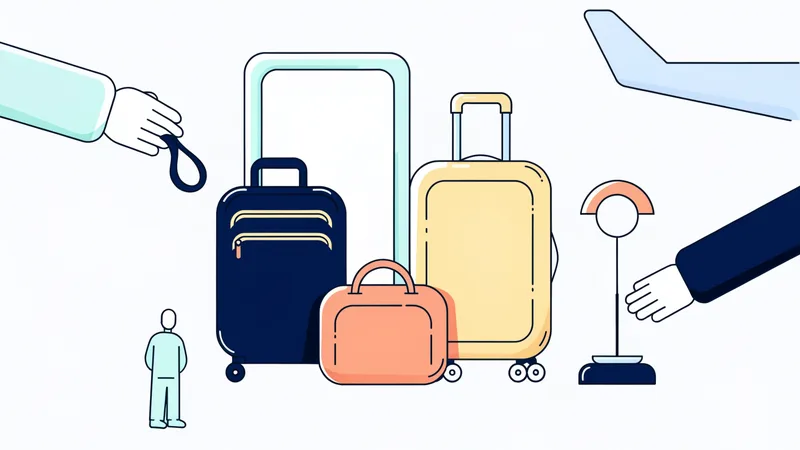
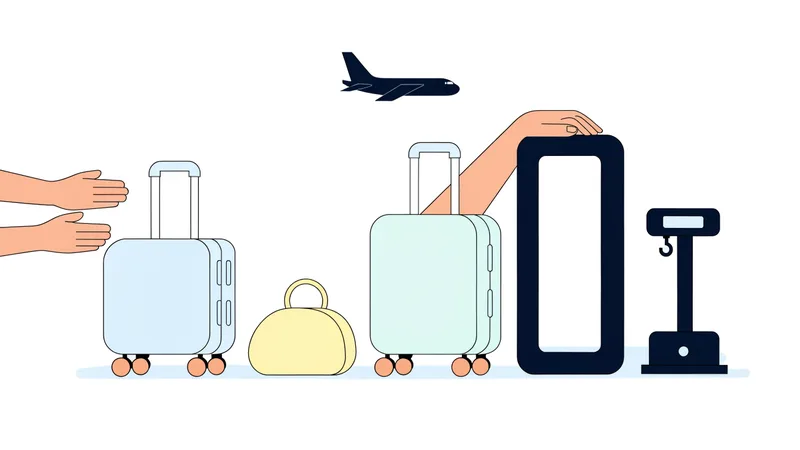
The rules themselves haven't really changed for 2026. What changed is enforcement. Airlines have rolled out automated sizer boxes at the gate, and the old trick of squishing a soft bag to make it fit is over — if it doesn't drop into the metal frame, it gets checked. This guide lays out the real limits, the fees, and the specific traps, so you know before you get to the airport. (Airline policies vary by route, fare, and cabin, and they change — always confirm with your specific carrier before you fly.)
The three baggage categories, explained
Every airline sorts what you bring into three buckets. Getting these straight is half the battle:
- Personal item — the small bag that fits under the seat in front of you: a purse, laptop bag, small backpack, or tote. Almost always free on US carriers.
- Carry-on — the larger bag that goes in the overhead bin. Free on most full-service US airlines; charged on basic economy and budget carriers.
- Checked bag — the large bag you hand over at check-in and collect at baggage claim. Usually costs a fee on domestic economy flights.
Most US travelers on a standard economy ticket get a personal item and a carry-on free, then pay for anything checked. Basic economy often strips you down to just the personal item — which is where a lot of surprise fees come from.
Carry-on size rules
The US standard is 22 x 14 x 9 inches, including wheels and handles — that last part trips people up, because a bag advertised as "21-inch" can still fail if its wheels and handle push it over. Added together, 22 + 14 + 9 = 45 linear inches, the figure some airlines (like Delta and Alaska) print on their policy pages.
This standard covers American, Delta, United, JetBlue, and Alaska. A few exceptions worth knowing:
- Southwest allows a slightly larger carry-on: 24 x 16 x 10 inches.
- Budget carriers (Frontier, Spirit) typically only give you a free personal item around 18 x 14 x 8 inches; an actual overhead carry-on costs extra.
- International carriers often add a weight limit that US domestic flights rarely enforce — commonly around 7 kg (about 15 lb) on many Asian and Middle-Eastern airlines, and 10 kg on Ryanair's Priority fare. European budget carry-ons run about 55 x 40 x 20 cm.
The practical move: buy a carry-on built to the strictest standard you'll realistically fly, and you stop checking fine print. If you fly mostly US domestic, 22 x 14 x 9 is your number.
Checked bag size and weight rules
For most US airlines, a standard economy checked bag is capped at 62 linear inches (length + width + height added together) and 50 pounds (23 kg). A typical large suitcase around 28 x 20 x 12 inches lands right near that 62-inch line, so oversize sneaks up on you fast — add two inches anywhere and you're over.
Exceptions to keep in mind (and to verify with your carrier):
- Frontier uses a lower 40-pound checked standard.
- Allegiant allows larger checked bags, up to about 80 linear inches.
- First/business class and top-tier elite flyers usually get 70 pounds instead of 50, though the 62-inch size cap typically still applies.
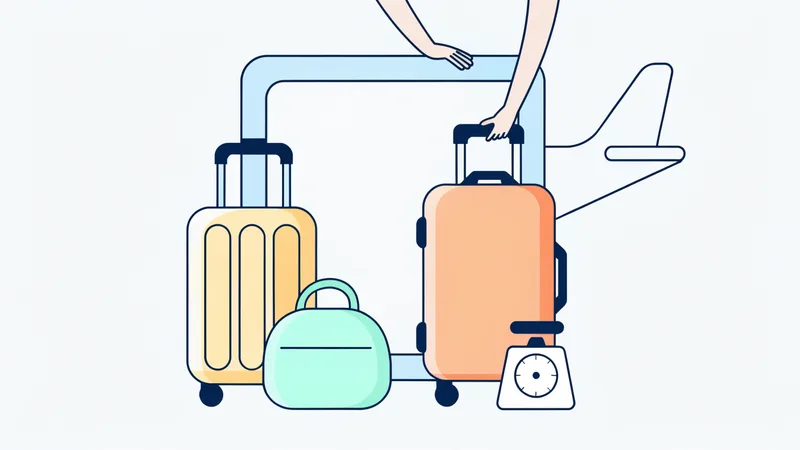
The most expensive trap: a bag that is both overweight and oversize gets hit with both fees, stacked. A 70-lb, 70-linear-inch bag can rack up overweight plus oversize charges that top $300 on some airlines. Weigh and measure at home — aim for about 47–48 lb to leave room for scale differences at the airport.
Personal item rules (the one that's getting stricter)
The personal item used to be loosely enforced. Not anymore — budget carriers especially now check it against a sizer, and the free allowance is smaller than people assume (often around 18 x 14 x 8 inches on strict airlines). A standard backpack usually counts as a personal item if it fits under the seat; an overstuffed one may not. If your whole strategy is "fly bag-fee-free with a backpack," measure it against your specific airline's personal-item box first.
Liquids, batteries, and prohibited items
- Liquids (the 3-1-1 rule): containers of 3.4 ounces (100 ml) or less, all fitting in one quart-size bag, one bag per passenger. This applies to carry-ons; larger liquids go in checked bags.
- Lithium batteries and power banks: must go in your carry-on, not checked — they're prohibited in the hold. This is why luggage with a non-removable built-in battery can't be checked on most airlines.
- Prohibited items and specific restrictions change; check your national security agency (TSA in the US) for the current list before you pack anything questionable.
How to avoid baggage fees you didn't expect
- Read your fare's allowance before booking, not at the gate. Basic economy is the usual culprit for surprise carry-on charges.
- Measure your bag with wheels and handles included, and measure it packed — a stuffed soft bag gains an inch.
- Pay for checked bags online in advance when you can; airport-counter fees are typically higher.
- Weigh checked bags at home and target a couple of pounds under the limit.
- Move heavy items to your carry-on if you're near the checked weight limit — US carriers rarely weigh carry-ons (international carriers do).
- Know your airline's specific numbers — our per-airline guides break down each major carrier's exact limits and fees.
Frequently asked questions
What are the new airline baggage rules for 2026?
The size and weight limits themselves are largely unchanged — carry-on at 22 x 14 x 9 inches, checked at 62 linear inches and 50 pounds on most US carriers. What changed is enforcement: airlines now use automated sizer boxes at the gate and no longer let soft bags squeeze past, so a bag that "always fit before" may get gate-checked. Always confirm your specific airline's current policy.
Does a backpack count as a personal item?
Usually yes — if it fits fully under the seat in front of you. On strict carriers the personal-item allowance can be as small as about 18 x 14 x 8 inches, so an overpacked backpack may be pushed to carry-on (and charged, on budget airlines). Measure yours against your airline's stated personal-item size before flying.
Can I bring a purse and a backpack and a carry-on?
Not usually all three for free. Most US airlines allow one personal item plus one carry-on. A purse and a backpack are typically both "personal items," so you'd generally need to fit them together as your single personal item, plus your one overhead carry-on. Airlines that only include a personal item (basic economy, budget carriers) allow even less.
How big is a 50-pound checked bag?
Fifty pounds is a weight limit, not a size — it's about how heavy the bag is, independent of dimensions. The separate size limit is 62 linear inches. A large suitcase (around 28–29 x 20 x 12 inches) can easily exceed 50 pounds when packed full, even while staying within the size cap, so weigh it before you go.
Is a 28-inch suitcase too big to check?
Not by itself. A 28-inch suitcase (roughly 28 x 20 x 12) is about 60 linear inches — just inside the common 62-inch limit on most US airlines. The risk is weight: a fully packed 28-inch bag often blows past 50 pounds. Check both the size and the weight against your carrier's limits.
What airlines still offer free checked bags?
This changes and varies by fare and status, so verify before booking — but historically Southwest was known for free checked bags, and many airlines waive the first checked-bag fee for co-branded credit card holders, elite-status flyers, and certain international routes or premium cabins. Our per-airline guides cover who gets bags free and under what conditions.
Guides in this section
24 guides sit under this page.
Roundups

Guides
Alaska Airlines baggage allowance and fees
American Airlines baggage allowance and fees
Baggage liability and insurance explained
British Airways baggage allowance and fees
Delta baggage allowance and fees
easyJet baggage allowance and fees
Emirates baggage allowance and fees
Flying with kids: bags, strollers and car seats

Flying with musical instruments

Flying with sports equipment: skis, golf clubs and bikes
Frontier baggage allowance and fees
JetBlue baggage allowance and fees

Liquids in hand luggage: the 3-1-1 rule and the quart bag
Lost, delayed and damaged luggage: what to do
Luggage weight limits: how to weigh a bag and avoid fees

Personal item vs carry-on: what is the difference?
Ryanair baggage allowance and fees
Smart luggage and battery rules
Southwest baggage allowance and fees
Spirit Airlines shutdown: baggage fees and refunds
United baggage allowance and fees