Checked Luggage: The Size & Weight Rules, and How to Stop Overpaying

Checked luggage is where the airline math turns against you. Go an inch or a pound over the limit and you're handing over a fee that can rival the cost of the bag itself — and if you're unlucky enough to be both oversize and overweight, you pay twice. This guide is about staying on the right side of those limits, choosing a bag that survives the hold, and never getting surprised at the counter.
We won't pretend to have wheeled ten suitcases through baggage systems ourselves — plenty of sites run that playbook. Instead, here's what actually matters: the size and weight rules, whether hardside or softside wins for checking, and the specific moves that keep bag fees off your bill. Our specific bag recommendations live in the roundups linked throughout.
The two numbers that rule checked bags: 62 and 50
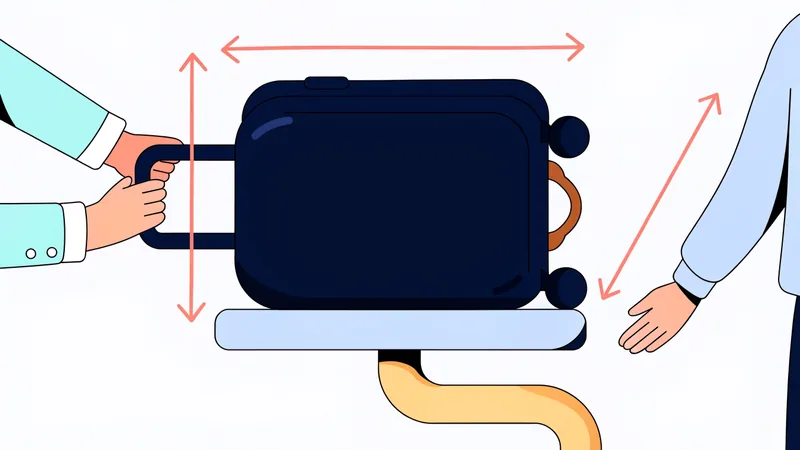
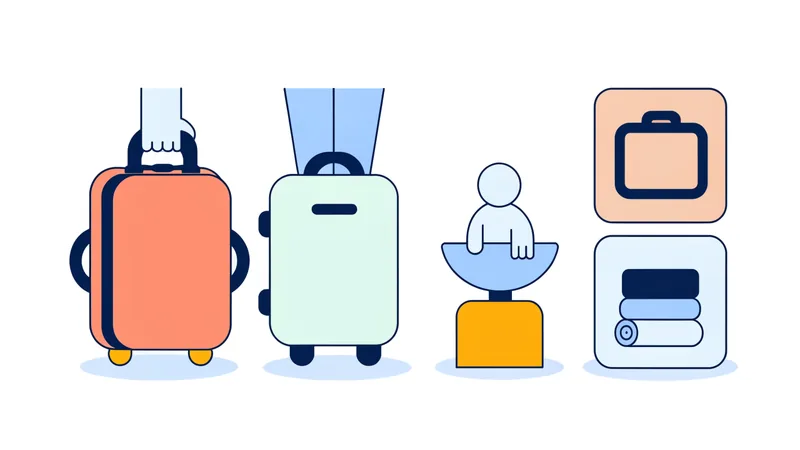
For most US airlines, a standard economy checked bag has to stay under 62 linear inches and 50 pounds. Learn both, because they're checked separately and you can bust one while nailing the other.
- 62 linear inches is length + width + height added together. A bag that's 28 x 20 x 12 inches is 60 linear inches — just inside the line. This is the size limit.
- 50 pounds (about 23 kg) is the standard economy weight limit. It has nothing to do with dimensions: a mid-size bag packed with books blows past 50 lb while staying well under 62 inches.
Cross either one and you pay. Cross both and — this is the expensive part — you get hit with an oversize fee and an overweight fee, stacked, which can run into the hundreds on some airlines. (Limits and fees vary by carrier, route, and fare, and airlines change them, so always confirm with yours.)
A couple of exceptions worth knowing: some budget carriers set a lower weight bar (Frontier uses 40 lb), a few allow larger bags (Allegiant goes up to about 80 linear inches), and first-class or top-tier elite flyers usually get 70 lb instead of 50 — though the 62-inch size cap typically still applies even then.
What size suitcase should you actually check?
Suitcases are sold by height in inches, and the sweet spot depends on your trip:
- 24–26 inch (medium checked): roughly 52–56 linear inches. The versatile pick for 4–7 days, comfortably inside every limit, and easier to keep under 50 lb because it simply holds less.
- 27–29 inch (large checked): around 60 linear inches. Great for 1–2 weeks, but it sits right at the 62-inch line, so there's no margin — and it's big enough that you'll fight the 50-lb weight limit if you pack heavy.
- 30–32 inch (oversize): about 64–66+ linear inches, which exceeds the standard 62-inch limit on most airlines. Huge capacity, but you'll likely pay an oversize fee every time. Buy one of these only if you genuinely need it and accept the fee.
Here's the counterintuitive truth: the biggest suitcase is often the worst buy. A 30-inch bag tempts you to fill it, and a filled 30-inch bag is both oversize and overweight. For most travelers, a 26- or 28-inch bag is the smart ceiling — big enough for real trips, small enough to keep you out of fee territory.
Hardside vs. softside for the hold
The carry-on hardside-vs-softside debate shifts a little for checked bags, because now the bag is out of your hands and getting thrown.
Hardside (hard-shell) checked luggage
- Wins on: protecting fragile contents from the rough handling of the hold, wiping clean, and a clean modern look. Clamshell packing keeps things organized.
- Loses on: weight (the shell adds pounds you can't pack), no give when you're wrestling the zipper shut on an overpack, and it shows scuffs.
Softside (soft-sided) checked luggage
- Wins on: lighter weight (more of your 50 lb goes to your stuff), expandability, and external pockets.
- Loses on: crush protection for anything breakable, and fabric can stain or scuff over years of conveyor belts.
For checked bags specifically, the honest guidance: hardside if you're checking anything fragile (electronics, gifts, bottles), softside if weight and flexibility matter more and your contents are soft. Many frequent flyers check a durable softside precisely because a lighter empty bag means more packing allowance before they hit 50 lb.
Whatever you choose, checked bags take a beating, so this is where durable construction earns its money — see below.
What survives the hold (the construction that matters)
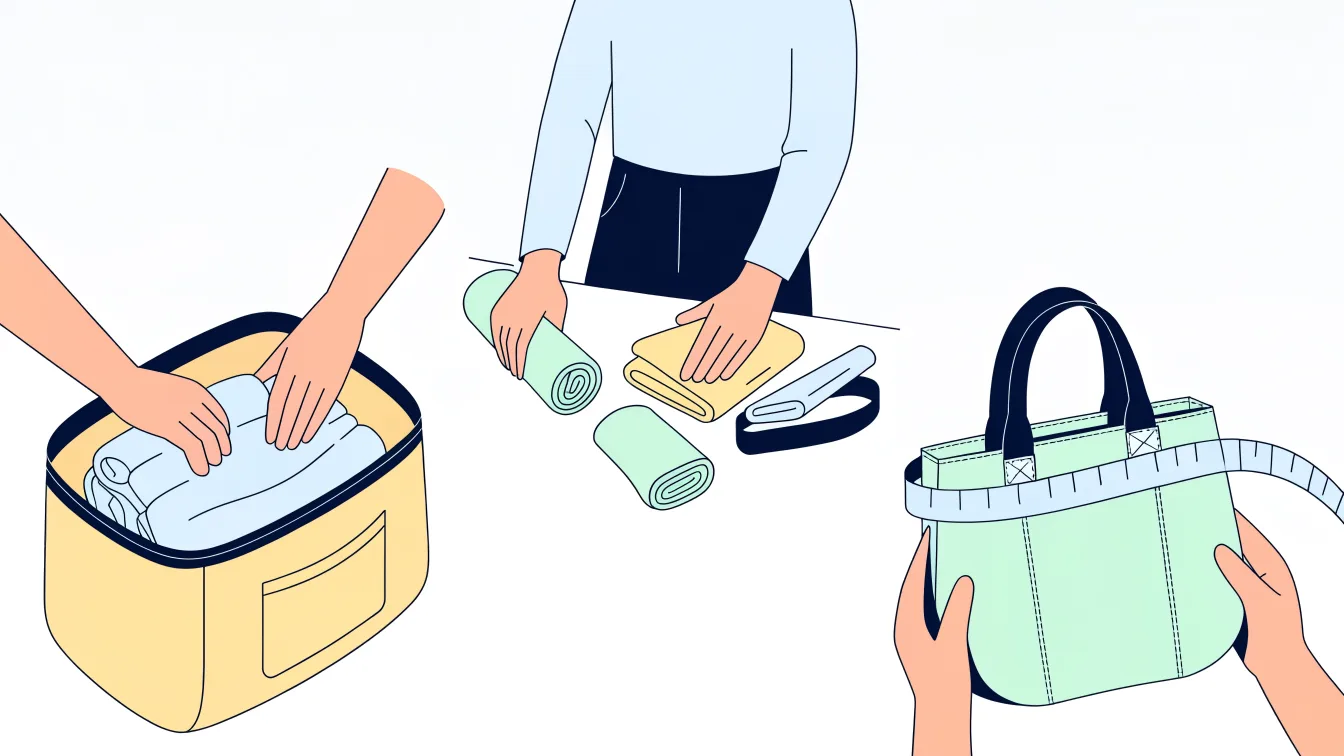
Checked bags fail more than carry-ons because they're handled harder. The parts to scrutinize:
- Wheels — the number-one casualty. Recessed or well-protected wheels survive conveyor systems better than exposed ones, and replaceable wheels mean a broken wheel is a cheap fix, not a dead bag.
- Zippers — the number-two casualty. Look for a quality zipper (the YKK stamp is a good sign) and, ideally, a self-healing coil on softside bags.
- Handles — the telescoping handle and the grab handles get yanked hard; they should feel solid, not rattly.
- The shell or fabric — polycarbonate flexes and survives impact better than brittle ABS on the hardside; ballistic nylon outlasts thin polyester on the softside. (Full detail in our materials guide.)
A durable checked bag with replaceable wheels can last a decade of trips; a bargain bag with molded-in wheels often dies in a year or two. For something that gets thrown for a living, spend on the parts that break.
How to protect a checked bag (and get it back)
Out of sight in the hold, a checked bag needs a little defense:
- A TSA-approved lock lets security open and re-lock your bag without cutting the lock off. A non-TSA lock just gets destroyed if they need in.
- A luggage tracker (an AirTag or Bluetooth tracker) tucked inside gives you peace of mind if a bag goes astray — a genuinely useful upgrade for connecting flights.
- A sturdy luggage tag with your contact info, plus a distinctive color or ribbon so you spot your bag fast at the carousel (though keep ribbons short — long ones can snag in baggage systems).
- Don't check anything irreplaceable. Medication, electronics, documents, jewelry, and anything valuable belong in your carry-on. And note: you cannot check lithium batteries or power banks — they have to fly in the cabin.
How to dodge checked bag fees
Bag fees are avoidable more often than people think. The principles (specific policies change constantly, so verify):
- Read your fare's allowance before booking. Basic economy often excludes a free checked bag entirely — the cheap fare gets expensive at the counter.
- Pay online in advance. Airport-counter bag fees are typically higher than the same fee paid when you check in online.
- Some fares, cabins, and routes include free bags. Premium cabins, many international routes, and certain fares bundle a checked bag — check what yours includes before assuming you'll pay.
- Airline credit cards and elite status frequently waive the first bag fee for the cardholder (and sometimes companions). If you check bags regularly on one airline, that perk can pay for the card.
- Weigh at home and stay a couple pounds under. Airport scales and home scales disagree; target 47–48 lb to avoid an overweight surprise.
- Consider carrying on instead. For shorter trips, a carry-on plus personal item skips the checked fee entirely (see our carry-on guide).

Frequently asked questions
What's the largest suitcase size airlines allow for checking?
The standard maximum is 62 linear inches (length + width + height combined) on most US airlines, which is roughly a 28-inch suitcase. A few carriers allow larger — Allegiant goes up to about 80 linear inches — but a 30- to 32-inch suitcase generally exceeds the standard 62-inch limit and incurs an oversize fee. Always confirm the specific airline's cap, since they differ.
Is a 32-inch suitcase too big to check?
Usually it's not banned, but it's oversize. A 32-inch suitcase is typically around 64–66+ linear inches, which exceeds the common 62-inch limit, so most airlines will charge an oversize fee to check it. It offers a lot of packing space, but you'll pay for that space on nearly every flight — confirm your carrier's size limit and fee before relying on one.
How big is a 50-pound checked bag?
Fifty pounds is a weight, not a size — it describes how heavy the packed bag is, independent of its dimensions. A medium 24–26 inch suitcase or a large 28-inch one can both hit 50 lb depending on what's inside; the 28-inch just gets there faster because it holds more. Since size (62 linear inches) and weight (50 lb) are checked separately, weigh your packed bag rather than guessing from its dimensions.
Do airlines prefer hard or soft luggage for checked bags?
Airlines don't care which you check — the size and weight limits are identical. The real question is your contents: hardside better protects fragile items from the rough handling in the hold, while softside is lighter (leaving more of your 50-lb allowance for your stuff) and more flexible. Check fragile things in hardside; check soft, sturdy contents in a lighter softside.
Which airlines still offer free checked bags?
This changes often and depends on the airline, fare, cabin, route, and your status, so verify before booking rather than relying on old information. Historically some carriers included free checked bags on certain fares, and many travelers get the first bag free through elite status or an airline credit card. Premium cabins and various international routes also frequently include checked bags — check what your specific ticket covers.
What can't you pack in checked luggage?
The big one is lithium batteries and power banks — they're prohibited in the hold and must go in your carry-on, which is why luggage with a non-removable battery can't be checked. Beyond that, you shouldn't check anything valuable or irreplaceable (electronics, documents, medication, jewelry), and airlines and security agencies maintain lists of restricted and prohibited items that change over time. Check your security agency's current guidance before packing anything questionable.
Guides in this section
3 guides sit under this page.