Bag & Luggage Materials Explained: How to Choose by What It's Made Of

The material a bag is made from decides almost everything that matters — how long it lasts, how much it weighs, whether it survives a rough baggage handler, and how it holds up in rain. But the labels are a mess: "ballistic nylon," "1680D," "polycarbonate," "genuine leather" all sound technical without telling you what's actually better. This guide translates them, so you can judge a bag by its material before you buy.
Hard-shell vs soft-shell: the first split
Bags fall into two broad material families. Hard-shell (rigid plastic or metal) protects contents best and wipes clean, but weighs more and can't squeeze into a tight overhead bin. Soft-shell (fabric) is lighter, more flexible, expandable, and easier to stuff into a sizer — but offers less crush protection. Neither is universally "better"; it depends on what you're carrying and how it's handled.
Hard-shell materials
Polycarbonate (PC) is the premium mainstream choice, making up a large share of hard-side luggage. Its key trick: it flexes under impact and springs back to shape rather than cracking, giving it the best impact-resistance-to-weight ratio of the luggage plastics. It costs more and weighs a little more than the cheaper plastics, but if you check bags regularly or travel to cold climates, it's the safest choice.
ABS (Acrylonitrile Butadiene Styrene) is the budget hard-shell material — the cheapest and one of the lightest, and the stiffest. The catch: it's brittle. ABS cracks when cold or subjected to repeated hard impacts, and it absorbs less impact energy than polycarbonate. Its textured surface hides scratches well. Best suited to occasional travelers who carry on and don't check bags in winter. Many "ABS" cases are actually an ABS/PC blend — stiffer and cheaper than pure PC, more durable than pure ABS.
Polypropylene (PP) is the lightest hard-shell plastic — strong, though less rigid than polycarbonate. It's a good middle option when weight matters most. (Curv, a premium material in some high-end luggage, is polypropylene-based.)
Aluminum sits at the top of the range for durability and price. It's a classic, extremely tough, and dents rather than cracks — but it's heavy, expensive, and shows scuffs and dents permanently.
Soft-shell fabrics
Ballistic nylon is the gold standard for soft-side durability. Typically 1680 denier, it was originally developed for military flak jackets and offers the highest abrasion resistance of the common bag fabrics. It's heavier and pricier than other fabrics, and it's what you want on luggage and bags that take a beating.
Cordura is another rugged nylon (often around 1050 denier), popular on tactical, outdoor, and hard-use bags for its abrasion resistance without excessive stiffness.
Nylon (standard) resists tears and abrasion better than polyester and is stronger for its weight, which is why it's common on quality backpacks and travel bags.
Polyester is the lightweight, budget-friendly workhorse — typically 600 to 900 denier. It's cheaper and lighter than nylon but wears faster against rough surfaces like conveyor belts. It can be coated for splash resistance at a low price, which is why it's everywhere on affordable everyday bags.
Canvas (cotton or blend) is a durable, classic-looking natural fabric popular on totes, weekenders, and heritage-style bags. It's heavier, holds water unless waxed or coated, but ages attractively and is easy to repair.
Denier, explained (and the trap)

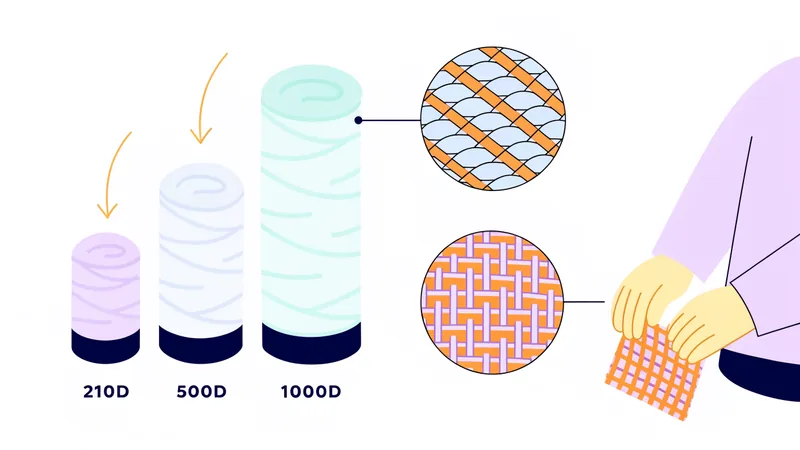
Denier (D) measures the thickness/weight of the individual threads in a fabric — higher denier generally means a more durable, more abrasion-resistant fabric. So within one fabric type, 1680D ballistic nylon is tougher than 600D nylon.
The trap: denier only compares meaningfully within the same fabric type. A higher-denier polyester is not automatically tougher than a lower-denier nylon — the fiber type matters more than the number. A 1050D Cordura nylon outperforms a higher-denier polyester. Treat denier as one input, not the whole story.
Leather types: the quality ladder
Leather is graded, and the names are deliberately confusing. From best to worst:
- Full-grain leather — the top layer with its natural grain intact. The most durable, ages into a patina, and can last decades with care. The premium choice, and the heaviest and priciest.
- Top-grain leather — full-grain that's been sanded to remove imperfections, then finished. More uniform and thinner, slightly less durable, still high quality.
- Genuine leather — despite the reassuring name, this is a lower-quality term for leather made from the underlying layers. It's real leather, but not durable like full- or top-grain.
- Bonded leather — scraps of leather ground up and glued together with a bonding agent. The lowest quality; it peels and cracks over time.
- PU / "vegan" leather — synthetic (polyurethane), not leather at all. Lighter, cheaper, no animal product, but generally less durable and it can crack or peel.
If someone advertises "genuine leather" as a premium feature, that's a small red flag — the genuinely premium terms are full-grain and top-grain.
Water-resistant vs waterproof (they're not the same)
- Water-resistant repels light rain and splashes for a while, usually thanks to a coating or tight weave — but it lets water through under sustained exposure.
- Waterproof actually keeps water out — and that takes more than fabric. It needs coatings (like TPU or PVC), welded or taped seams, waterproof zippers, and reinforced stress points. A "waterproof" bag that only has a coated fabric but ordinary stitched seams will still leak at the seams.
For anything you'll use in real rain, look at the seams and zippers, not just the fabric claim.
How to choose a bag by material
- Check bags often / cold climates: polycarbonate hard-shell, or ballistic nylon soft-shell.
- Weight is the priority: polypropylene hard-shell, or nylon/polyester soft-shell.
- Tight budget, occasional travel: ABS hard-shell, or coated polyester soft-shell.
- Rugged/outdoor/tactical use: Cordura or ballistic nylon.
- Investment/heritage everyday bag: full-grain or top-grain leather (with care), or waxed canvas.
- Real wet-weather use: a genuinely waterproof build (coated fabric + welded seams + waterproof zips), not just water-resistant fabric.

Frequently asked questions
What is ballistic nylon?
Ballistic nylon is a thick, tightly woven nylon fabric — typically 1680 denier — originally developed for military flak jackets. It's the most abrasion- and tear-resistant of the common soft-side bag fabrics, which makes it a premium choice for durable luggage, work bags, and backpacks. It's heavier and more expensive than standard nylon or polyester.
Which is better, polycarbonate or ABS luggage?
Polycarbonate is more durable — it flexes under impact and returns to shape, while ABS is stiffer but brittle and can crack in cold weather or under repeated hard impacts. ABS is cheaper and fine for occasional carry-on travelers; polycarbonate is the better choice if you check bags regularly or travel in cold climates. Many budget cases use an ABS/PC blend that splits the difference.
What does denier (D) mean on a bag?
Denier measures the thickness and weight of the fabric's threads. A higher denier generally means a tougher, more abrasion-resistant fabric — but only when comparing the same fiber type. A 1680D ballistic nylon is stronger than 600D nylon, but you can't assume a high-denier polyester beats a lower-denier nylon, because the fiber type matters more than the number alone.
Is "genuine leather" good quality?
Not especially. Despite the name, "genuine leather" is an industry term for lower-grade leather made from the underlying layers of the hide. The genuinely high-quality grades are full-grain (the most durable, ages beautifully) and top-grain. If durability matters, look for those terms rather than "genuine leather."
What's the difference between water-resistant and waterproof bags?
Water-resistant fabric repels light rain and splashes but lets water through under sustained exposure. Waterproof means water is actually kept out — which requires more than fabric: coatings, welded or taped seams, and waterproof zippers. A bag can have "waterproof" fabric and still leak at ordinary stitched seams, so check the seams and zippers for genuine wet-weather use.
What is the most durable bag material?
For hard-shell luggage, aluminum is the toughest (and heaviest and most expensive), followed by polycarbonate. For soft-side fabric, ballistic nylon (typically 1680D) is the most durable, with Cordura close behind. For leather bags, full-grain leather lasts longest. The "best" depends on your priorities — durability always trades off against weight and cost.
Guides in this section
18 guides sit under this page.
Comparisons

Ballistic nylon vs Cordura vs polyester
Full-grain vs top-grain vs genuine leather

Polycarbonate vs ABS vs aluminum luggage

Real leather vs vegan leather handbags
Guides
Bag fabric denier explained

Bag linings: why the inside matters

Canvas and waxed canvas

Dyneema, X-Pac and other technical fabrics
Exotic leathers and the rules around them
Fabric coatings: DWR and PU explained

Foam and padding in bags

Leather tanning explained: vegetable-tanned vs chrome-tanned
Neoprene bags
Ripstop fabric explained

Suede and nubuck bags

Tarpaulin, TPU and PVC bags

Vegan leather types: PU, PVC and plant-based