Fabric coatings: DWR and PU explained
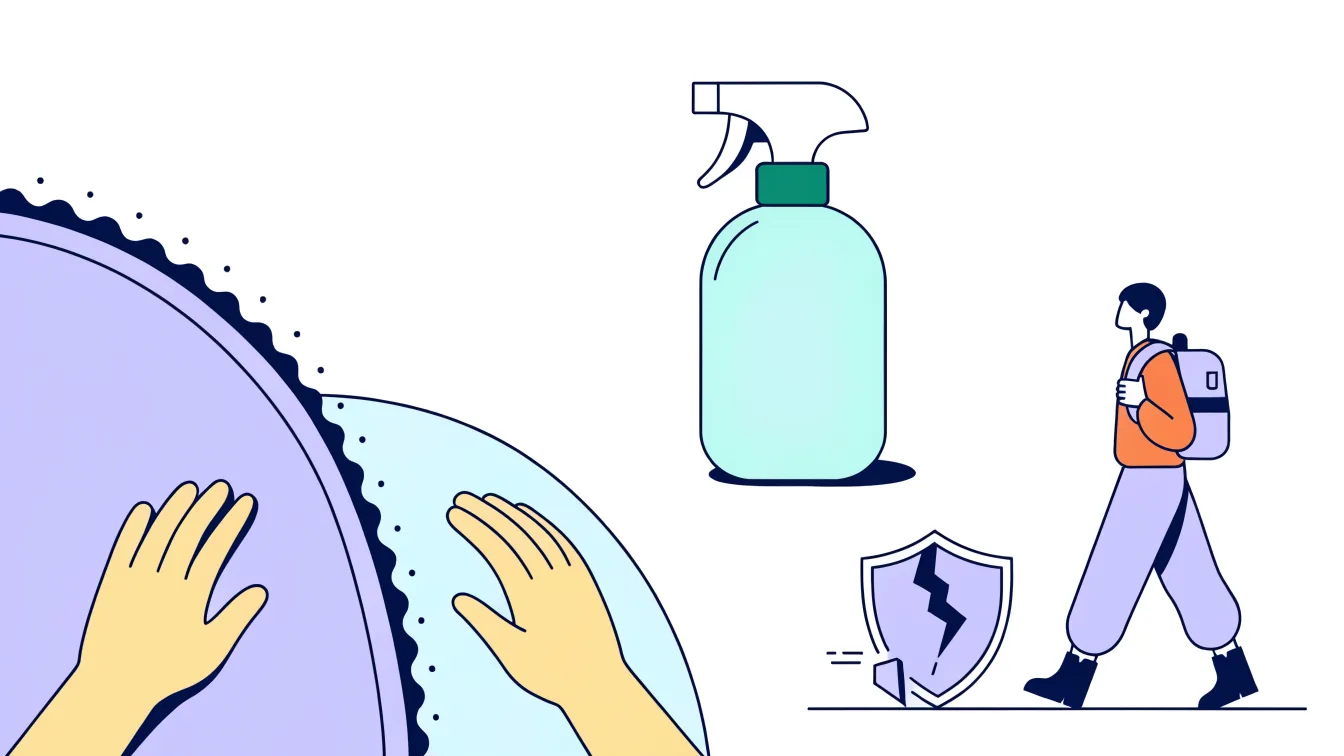
A DWR coating is a durable water-repellent surface finish that encourages water to bead; a PU coating can form a separate inner barrier. They serve different jobs. Identify the affected layer before cleaning, reproofing or assessing a bag's water protection.
What a DWR coating does on the outside
DWR stands for durable water repellent. Patagonia describes finishes that help moisture bead and roll off an outer surface. Think of it as a surface function, rather than the complete construction of a waterproof bag.
Separate three observations: what happens on the face, what the inner surface looks like, and where water enters the assembly. A darkened outer panel and a visibly peeling inner coating are different problems to describe.
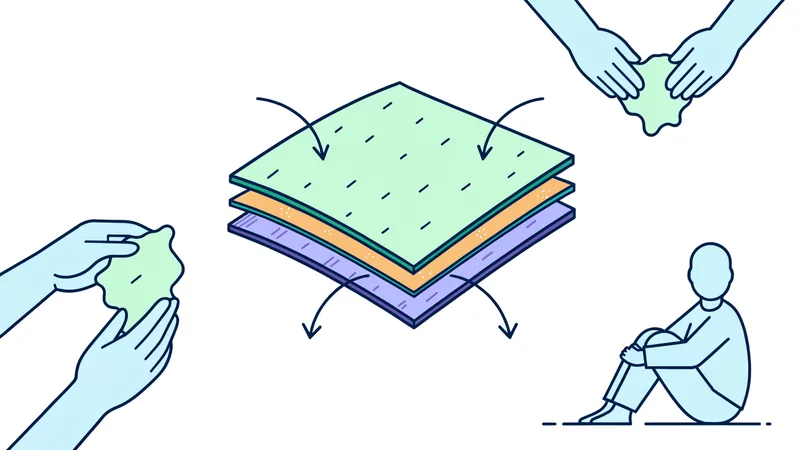
| Layer or feature | Main question | Useful evidence |
|---|---|---|
| Outer DWR finish | Does the face shed water as intended? | Maker's care and reproofing instructions |
| Inner PU coating | Is the barrier intact? | Construction details and condition photographs |
| Seams and closure | How is the assembled opening protected? | Finished-product guidance |
| Separate liner or cover | What coverage does it provide? | Instructions for that component |
Use the table to locate the issue before choosing a treatment. A surface spray description should not replace an assessment of damaged coating or an unsuitable closure.
The bag materials guide explains the underlying textile terms. Keep the fabric, surface finish and finished-bag claim separate on your comparison sheet.
PU is another layer, with its own failure modes
PU means polyurethane. Nikwax describes backpack textiles that pair an inner polyurethane or elastomeric coating with an outer water-repellent finish. That construction explains why reproofing the face and repairing a barrier are different tasks.
For existing bags, inspect the inside gently. Photograph widespread flaking, cracking or separation without scraping the layer away. Also record whether the problem appears near a fold, seam or repeated contact point.
ACT explains that polyurethane-coated upholstery can crack, flake or delaminate through hydrolysis. It also notes that inappropriate cleaning products can cause similar damage. These are material mechanisms, not a remote diagnosis of your bag.
Do not use a laboratory hydrolysis result as a promise of a fixed number of years in your climate. Ask what material and method the result covers, then follow the finished bag's storage instructions.
For repair, identify whether the maker supports recoating, patching or replacing the affected component. Avoid assuming a repellent spray can restore a missing inner layer.
The waterproof versus water-resistant guide helps distinguish material claims from evidence about the complete assembled bag.
Wear, cleaning and reproofing require different decisions
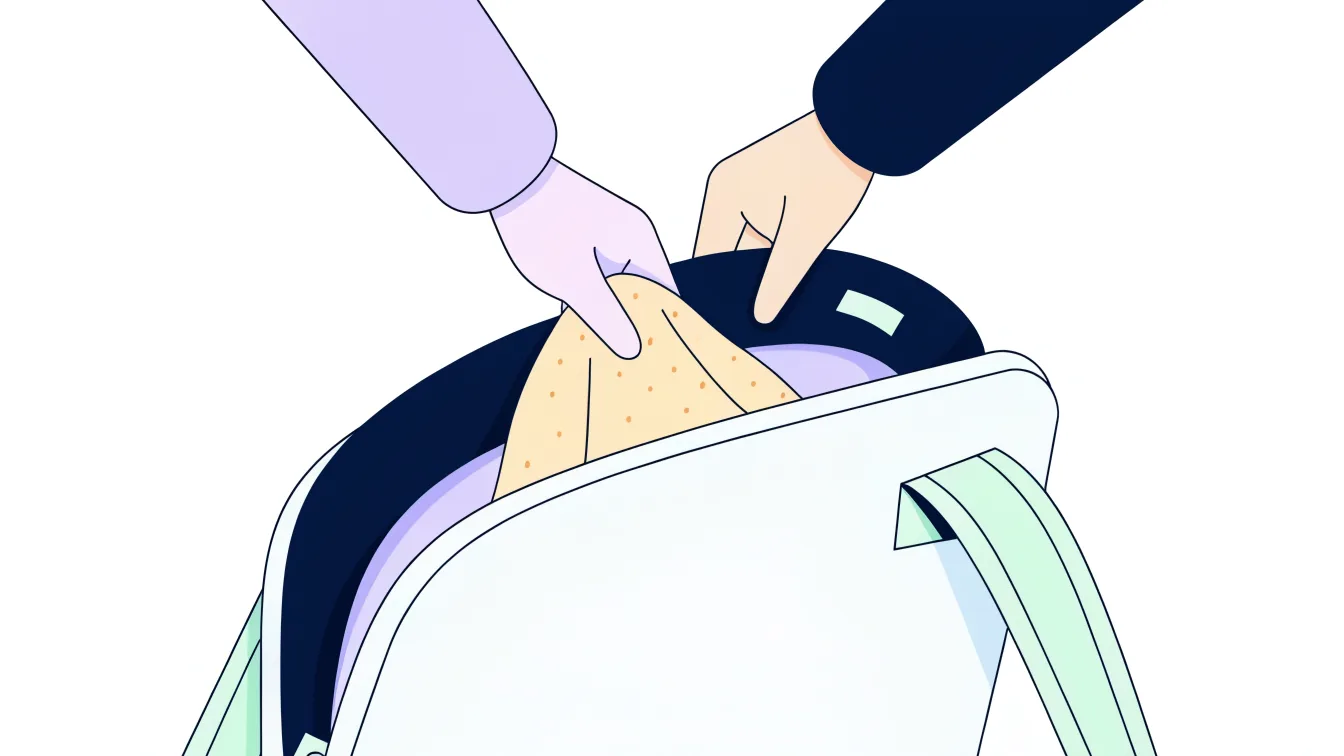
Start with the bag's care label. Empty the compartments, identify removable components and read the drying instructions before choosing a cleaning or reproofing product.
GORE-TEX says wear, dirt, sunscreen and detergents can reduce its garments' water repellency. Its guidance calls for cleaning and reactivation before reapplication when those steps can restore beading. For a bag, follow only the cleaning, reactivation or reproofing methods its maker permits.
Care methods are not interchangeable across outdoor equipment. GORE-TEX provides washing and heat-reactivation directions for its outerwear. Those garment instructions are not automatic permission to heat a backpack containing other materials.
For a bag-specific example, Osprey advises against machine washing packs and describes air drying away from direct sunlight. Read the instructions for your own model, including exceptions for wheeled or specialist assemblies.
If reproofing is permitted, confirm the treatment's compatibility with the textile and application method. Follow the product label and any hidden-area test instruction. Keep the item supported during work and allow the specified drying process to finish before storage.
Use how to clean a backpack for the practical cleaning sequence, while retaining your model's specific restrictions.
Understand the move away from intentionally added PFAS
Some finish descriptions now specify that they are made without intentionally added PFAS. Keep that wording intact rather than replacing it with a broader claim about every component.
EPA explains that PFAS are a large group of chemicals, many of which persist in the environment. That is the environmental context; it does not establish the chemistry of an unnamed bag finish.
One documented company transition provides a concrete example. Patagonia states that new membranes and water-repellent finishes from Spring 2025 onward are made without intentionally added PFAS. This describes that company's stated scope, not every bag on the market.
For shopping, identify the component named in the claim. Does the wording concern the finish, a membrane or the complete product? Save the exact statement with the item's material description.
Avoid extending a statement about one chemical family into a claim that the product has no environmental impact. Request a named assessment for any numerical comparison rather than inferring one from the finish label.
For secondhand items, ask which production version is being described. A current company policy should not be assumed to describe an older bag's original materials.
What it means when you shop: read claims by layer
Treat DWR coating as one entry in a larger construction description. Add the base textile, inner coating, seams, closure and care requirements before deciding what protection is documented.
Use your expected exposure to frame the comparison. A short walk in rain, a wet surface and immersion are different scenarios. Request the finished product's instructions for the scenario you actually need.
Three common assumptions deserve separating. Durable does not mean permanent. Restoring surface beading does not document repair of a damaged inner film. A finish's chemical description does not supply a whole-bag waterproof rating.
When buying secondhand, request photographs of both faces of accessible panels. Ask about previous washing, reproofing and coating repairs. Describe changes in condition rather than deciding their cause from one photograph.
For an existing bag, keep a short care record with the product used and the date of application. This gives the maker or repairer useful information if a later problem needs assessment.
Compare technical bag fabrics when a listing describes a laminate rather than a conventional coated weave. Match maintenance to the actual construction instead of applying a familiar treatment to every weather-resistant material.

FAQ
Does water beading prove my backpack is waterproof?
Beading describes the face treatment's behavior. TOM BIHN distinguishes its fabric treatments from complete waterproofness and notes that its sewn bags are not submersible. Look for a finished-product statement covering seams and closures. Do not turn a successful surface observation into an immersion rating.
Can I use a clothes dryer to reactivate a bag's finish?
Only follow heat instructions that apply to your actual bag. GORE-TEX's heat-reactivation guidance concerns compatible outerwear. Read the bag maker's label first, including restrictions for padding, adhesives and other components. Instructions for a rain jacket do not establish a backpack's permitted drying method.
Will a water-repellent spray fix peeling PU?
Do not treat those as the same repair. Published fabric guidance distinguishes the outer repellent finish from an inner PU coating. Ask the maker to assess the damaged layer and specify a compatible repair. Surface beading alone does not show that an inner barrier has been restored.
Does without intentionally added PFAS mean every older product is covered?
No such assumption follows from a current statement. Patagonia, for example, identifies a Spring 2025 starting point for its new membranes and finishes. Match the claim to the actual product version and named components. Retain its precise wording rather than extending it to earlier stock.
Sources
- nikwax.com/en-us/products/waterproofing/equipment-waterproofing/tent-gear-solarproof
- tombihn.com/pages/materials
- contracttextiles.org/learn/hydrolysis-what-you-need-to-know
- gore-tex.com/support/care/outerwear
- osprey.com/gb/how-to-clean-your-osprey-backpack
- epa.gov/pfas/our-current-understanding-human-health-and-environmental-risks-pfas
- patagonia.com/our-footprint/pfas.html