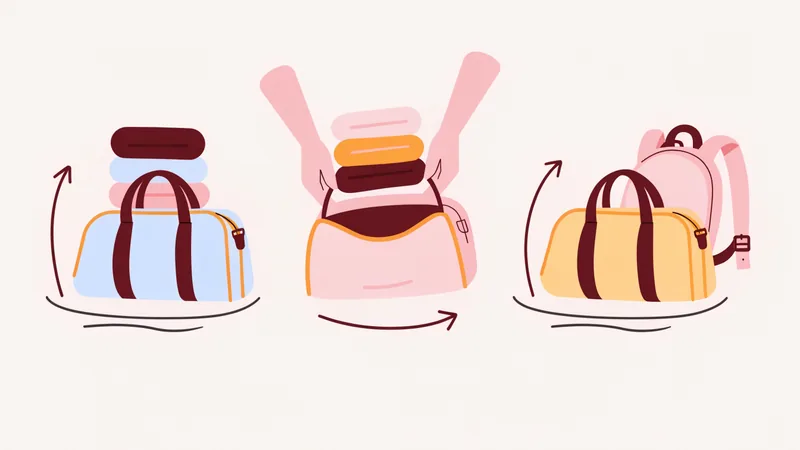
Duffel Bags: Types, Sizes, and the Carry-On Question

The duffel is the most honest bag there is: a big soft sack with handles that swallows whatever you throw at it and squishes into spaces a rigid suitcase never could. That flexibility is its whole appeal — it's why the same style of bag works for the gym, a weekend away, a gear-hauling road trip, and (if you size it right) a carry-on. This guide sorts the types, the sizes, and the one question everyone asks: can I bring it on the plane?
We're not handing you a tested top-ten. Instead: what a duffel actually is, the types and who each suits, how the sizes map to trips, whether yours can fly as a carry-on, and — because people always ask — why it's spelled two different ways.
What a duffel bag actually is (and why the two spellings)
A duffel is a soft, roomy, barrel- or rectangle-shaped bag with a wide top (or side) zip, carried by two handles or a shoulder strap. No rigid frame, no wheels by default — just a flexible, capacious main compartment you load from the top.
And yes, "duffel" and "duffle" are the same bag — two accepted spellings of the same word. The name comes from Duffel, a town in Belgium where the thick woolen cloth the original bags were made from was produced. "Duffel" is the older and more common spelling, but "duffle" is equally correct, so don't overthink it when you're shopping — they're identical.
The types of duffel
The basic sack has evolved into several distinct styles:
- Classic duffel — the original: handles plus a detachable shoulder strap. Simple, tough, and the lightest option. Great for the gym, the weekend, and throwing in a car.
- Backpack duffel (convertible) — a classic duffel with hideaway backpack straps, so you can carry it two-shoulder and hands-free when it's heavy or you've got a hike from the car. The most versatile carry.
- Wheeled / rolling duffel — a duffel with wheels and a telescoping handle. All the packing flexibility of a duffel, but you roll it instead of hauling it — ideal for heavy loads and long airport walks. (A duffel with wheels is simply called a wheeled or rolling duffel.)
- Packable duffel — folds down into its own pocket when empty. The spare/backup bag you tuck into a suitcase for the extra stuff (or souvenirs) on the way home.
- Gym duffel — built for the gym, with a ventilated shoe compartment and a wet/dry pocket for sweaty clothes. (Full guide: gym & sports bags.)
- Gear hauler — heavy-duty, weather-resistant, burly zippers, built to be thrown in a truck bed or a bush plane. The choice for adventure gear and rough handling.
- Garment duffel — doubles as a garment bag, letting you pack a suit or dress flat alongside everything else.
Pick the type by your main use: classic for the gym and weekends, backpack duffel for versatility, wheeled for heavy loads, packable for a spare, gear hauler for the outdoors.
Duffel sizes: which liters for which trip
Duffels are measured in liters. Rough map:
- 30–45L: a weekender or gym bag — a couple of days of clothes, or a full gym kit. Many in this range are carry-on-sized.
- 50–70L: a week's worth for one person, or a family's weekend. The travel-duffel sweet spot.
- 90–130L+: a gear hauler — expedition kit, sports equipment, moving a lot of stuff. Too big to carry on; this is checked or thrown in a vehicle.
The honest tip: buy for your typical trip, not your biggest. A giant duffel tempts you to overpack, and a fully loaded 100L duffel is brutally heavy to carry by hand (that's exactly when a wheeled duffel or backpack duffel earns its keep).
Can a duffel be a carry-on?

Yes — a duffel can absolutely be a carry-on, and soft duffels have a genuine advantage here: because they have no rigid shell, they squish to fit the sizer in a way a hard suitcase can't. To fly it in the cabin, it just has to fit the standard carry-on limit — 22 x 14 x 9 inches on most US airlines (see our airline baggage rules guide for the specifics and the international differences). Many travel duffels are deliberately built to that carry-on size, often around 40L.
Wheeled duffels can be carry-ons too, with one catch: the wheels and frame count toward the dimensions, so a rolling duffel has to fit 22 x 14 x 9 including its wheels — and a soft duffel's squish advantage is reduced once you add a rigid wheeled base. Rolling duffels are allowed on planes; they just have to meet the same size limit as any other carry-on. Always measure yours packed, wheels included, and check your airline.
Duffel vs. suitcase: when to grab which
They solve different problems:
- A duffel wins when you want light weight, flexibility, and the ability to cram it into a car trunk, an overhead bin, or a tight space. It's the gym, weekend, gear, and two-bag-travel champion.
- A suitcase wins when you want structure, protection for fragile items, built-in organization, and an easy roll through an airport.
The duffel's one weakness is organization — it's essentially one big compartment. The fix is cheap and effective: packing cubes turn that open cavity into tidy, findable sections (see our packing cubes guide). Pair a duffel with cubes and you get flexibility and order.
What to look for in a good duffel
- Durable material — ripstop or ballistic nylon for toughness, canvas for a classic look, coated fabric for weather resistance (materials guide).
- Strong zippers — the main compartment zip is the top failure point; look for a quality, ideally weather-resistant zipper.
- Comfortable carry — a padded, adjustable shoulder strap for a classic duffel; padded backpack straps on a convertible; good wheels and handle on a wheeled one.
- Useful pockets — at least one exterior or interior zip pocket for small items, plus a shoe or wet pocket if it's for the gym.
- A trolley sleeve (on smaller travel duffels) so it rides on your suitcase handle.
- Weather resistance if it'll see rain or rough conditions — a coated fabric and water-resistant zippers.

Frequently asked questions
What's the difference between a duffel bag and a duffle bag?
There's no difference — they're two accepted spellings of the same word for the same bag. "Duffel" is the original and more common spelling (from the Belgian town of Duffel, where the original cloth was made), while "duffle" is an equally correct variant. When you're shopping, treat listings using either spelling as the same type of bag.
Why is it called a duffel bag?
It's named after Duffel, a town in Belgium, where the thick, coarse woolen cloth that the original bags were made from was produced. The cloth took the town's name, and the bags made from it became "duffel bags." The design — a simple soft cylindrical sack with a drawstring or zip top — has stuck around for well over a century because it's so practical.
Can a duffel bag be a carry-on?
Yes, as long as it fits your airline's carry-on limit — typically 22 x 14 x 9 inches on US carriers. Soft duffels have an edge because they squish to fit the sizer box, and many travel duffels (often around 40L) are built specifically to carry-on dimensions. Measure yours packed before you fly, and check your specific airline, since limits vary.
Are rolling duffel bags allowed on planes?
Yes — a rolling duffel is allowed as a carry-on if it fits within the airline's size limit (usually 22 x 14 x 9 inches), but the catch is that the wheels and frame count toward those dimensions. So a carry-on rolling duffel must fit the limit including its wheels. Larger rolling duffels are checked like any oversized bag. Always measure with the wheels included and confirm your carrier's rules.
What size duffel can be a carry-on?
As a rough guide, a duffel around 40 liters or smaller usually fits carry-on dimensions, especially a soft one that can compress into the sizer. But liters alone don't guarantee it fits — the shape matters, and a stuffed duffel expands. The reliable check is the physical measurement: it must fit your airline's limit (about 22 x 14 x 9 inches on US carriers) when packed.
Are wheeled duffel bags good?
They're excellent when you're carrying heavy loads or facing long airport or hotel walks, because you roll the weight instead of hauling it on your shoulder — you get a duffel's packing flexibility with a suitcase's easy transport. The trade-offs are added weight and cost from the wheels and frame, and slightly less squish for fitting tight spaces. For heavy or frequent travel, a wheeled duffel is well worth it; for a light gym or weekend bag, a classic duffel is simpler.
Duffel or suitcase — which should I get?
Choose a duffel for light weight, flexibility, and cramming into tight spaces (gym, weekends, gear, two-bag travel); choose a suitcase for structure, protection of fragile items, and built-in organization with an easy airport roll. If you love the duffel's flexibility but want order, pair it with packing cubes — that solves its one real weakness, the single-big-compartment layout.
Guides in this section
3 guides sit under this page.