Luggage & Bag Sizes Explained: What the Numbers Actually Mean

When a suitcase is called "24-inch" or "40-liter," those numbers measure completely different things — one is a dimension, one is capacity, and neither tells you the weight. That confusion is exactly why people buy a bag that turns out to be too big for their airline or too small for their trip. This guide clears it up: how bags are sized, how to measure one correctly, and what each common size actually holds.
The three numbers on every bag: dimensions, capacity, and weight
These get mixed up constantly, so start here:
- Dimensions (inches or cm): the external size — height x width x depth. This is what airline limits and "20-inch / 28-inch" labels refer to.
- Capacity (liters): how much volume the bag holds inside. Common for backpacks, duffels, and some luggage. A "40L" bag says nothing about its outer dimensions directly.
- Weight (pounds or kg): how heavy the empty bag is, and separately, the airline's limit on how heavy the packed bag can be.
A bag can be within the size limit but over the weight limit, or vice versa — they're checked separately. Keep the three straight and most sizing confusion disappears.
How to measure a bag correctly (the mistake that fails airline sizers)
Measure the bag's full external dimensions, including the wheels and handles — not just the packing compartment. This is the single most common measuring mistake, and it's why a suitcase sold as "21-inch" can still fail a 22-inch gate sizer: the retailer measured the body, but the airline measures everything sticking out.
To measure:
- Stand the bag upright, packed if possible (a stuffed soft bag gains up to an inch).
- Height: floor to the very top, including retracted handle and wheels.
- Width: the widest point, side to side, including any protruding pockets.
- Depth: front to back at the thickest point, including wheels.
Those three numbers are what every airline size limit is based on.
Linear inches, explained
Many airlines state limits in linear inches — that's simply length + width + height added together. A bag that's 28 x 20 x 12 inches is 60 linear inches (28 + 20 + 12). The standard checked-bag limit on most US airlines is 62 linear inches, so that example bag just fits. Add two inches anywhere and you cross into oversize-fee territory. (Always verify the exact limit with your carrier — they vary.)
Standard luggage size categories

Suitcases are usually labeled by their height in inches. Here's what each common size means and suits — dimensions are approximate and vary by brand:
| Size label | Rough dimensions | Linear inches | Best for |
|---|---|---|---|
| Underseat / personal (16–18") | ~16–18 x 13 x 8 | ~37–39 | Fits under the seat; personal-item allowance |
| Carry-on (20–22") | ~20–22 x 14 x 9 | ~43–45 | Overhead bin; 1–4 days (the 22" is the US carry-on max) |
| Medium checked (24–26") | ~24–26 x 17 x 11 | ~52–56 | 4–7 days; checks easily within limits |
| Large checked (27–29") | ~28 x 20 x 12 | ~60 | 1–2 weeks; near the 62-in checked limit |
| Oversize (30–32"+) | ~30–32 x 21 x 13 | ~64–66+ | Long trips/families — but often exceeds 62 linear inches, triggering an oversize fee |
Two takeaways: a 22-inch bag is the standard US carry-on, and a 32-inch suitcase usually counts as oversize for checking on most airlines — great for capacity, but you'll likely pay a fee, so confirm before buying.
Understanding liters (capacity)
Backpacks, duffels, and some soft luggage are sized in liters (L) — the internal volume. Rough guide:
- 10–20L: small daypack, everyday carry, a commute with the basics.
- 20–35L: a full daypack or standard backpack — day trip, work, school.
- 35–45L: the carry-on-travel sweet spot — many "one bag" travel backpacks live here and fit carry-on limits.
- 50–70L+: multi-day backpacking and long trips.
Liters tell you how much fits, not whether the bag is airline-legal — a 45L travel backpack can still exceed carry-on dimensions if it's shaped wrong, so check both the liters and the inches.
Matching bag size to your trip
A simple rule of thumb (packing style varies this a lot):
- 1–3 days: carry-on (20–22") or a 30–45L bag — you can travel cabin-only.
- 4–7 days: medium checked (24–26") or a carry-on plus a personal item if you pack light.
- 1–2 weeks: large checked (28") — right near the size limit, so watch the weight.
- 2+ weeks or family: oversize or multiple bags — and accept you may pay checked/oversize fees.
Packing light with cubes and versatile clothing can drop you a full size category, which is often the difference between checking a bag and not.
Sizing beyond luggage: backpacks, laptop bags, and handbags
- Backpacks are sized in liters (above). Fit also matters — torso length and strap adjustment, covered in our backpack guides.
- Laptop bags are sized to screen size — a "15-inch laptop bag" fits up to a 15" laptop, but check the sleeve's internal dimensions, since laptop footprints vary between models.
- Handbags run from mini (phone + cards) through oversized (tote territory); there's no industry standard, so go by the listed dimensions and what you carry.
We keep dedicated size guides for each of these; this pillar is the master reference they all connect to.

Frequently asked questions
What does a 24-inch suitcase mean?
The "24-inch" is the suitcase's height, including wheels and handles — roughly 24 x 17 x 11 inches, or about 52 linear inches. It's a medium checked size, good for about 4–7 days of packing, and it fits comfortably within the standard 62-linear-inch checked limit on most airlines.
How big is a 62-linear-inch checked bag?
Sixty-two linear inches means the length, width, and height added together equal 62 — for example, a bag that's about 28 x 20 x 12 inches. It's the standard maximum checked-bag size on most US airlines (separate from the 50-pound weight limit). Larger than that and you typically pay an oversize fee.
Do you include the wheels when measuring a suitcase?
Yes — always. Airlines measure the bag's full external dimensions, wheels and handles included, and their gate sizers are cut to match. A bag measured "body only" can look compliant on paper but still fail at the gate, so measure everything that sticks out.
Is a 28-inch suitcase too big for a carry-on?
Yes. A 28-inch suitcase is a large checked bag — far bigger than the roughly 22-inch carry-on maximum. Carry-ons top out around 20–22 inches (22 x 14 x 9 on most US airlines). A 28-inch bag must be checked.
What does a 40-liter bag mean?
Forty liters is the bag's internal capacity — the volume it holds — not its external dimensions or weight. A 40L bag is a popular "one bag" travel size that often fits carry-on limits, but you should still check its stated dimensions against your airline's carry-on size, because liters alone don't guarantee it fits.
Is a 32-inch suitcase allowed on planes?
As a checked bag, usually yes — but a 32-inch suitcase is typically around 64–66+ linear inches, which exceeds the standard 62-inch limit on most airlines, so you'll likely pay an oversize fee. It offers a lot of packing space; just confirm your carrier's size limit and fees before relying on it.
Guides in this section
8 guides sit under this page.
Guides
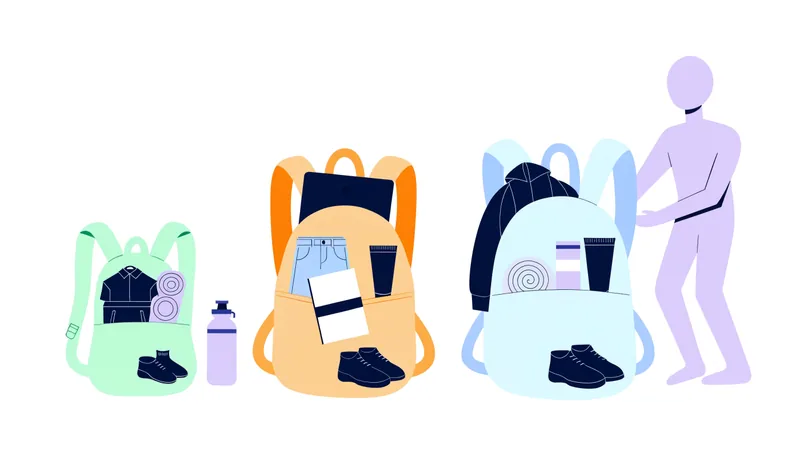
Backpack size chart: what 20, 30 and 40 liters really hold

Duffel bag size guide: liters by trip length

Gym bag size guide

Handbag size guide: mini, small, medium and large

How to measure a bag: liters, linear inches and dimensions

Lunch bag and cooler size guide

Tote bag size guide