How to Pack a Suitcase: The Complete, Practical Guide
Packing well isn't a talent — it's a method. Anyone can fit a week into a carry-on, arrive wrinkle-free, and never dig for a charger again, once they know the system: what to roll and what to fold, how to layer a suitcase, and how to pack outfits instead of a pile of "maybes." This guide covers all of it, plus the popular packing "rules" that stop you overpacking and where those genuinely help.
Roll or fold? Use both
The eternal debate has a boring, correct answer: it depends on the garment, so do both.
- Roll casual and knit clothes — t-shirts, jeans, activewear, underwear. Rolling saves space and produces softer, fewer creases than a hard fold, and rolled items pack tightly into gaps.
- Fold structured and dressy clothes — dress shirts, trousers, blazers — which crease worse when rolled or crushed. Fold them flat along their natural lines.
A tidy hybrid: roll the casual layer, fold the dressy pieces flat and lay them on top, and (for a suit) use a garment bag or the reverse-shoulder fold (see our garment bags guide). Packing cubes work with either method and keep the whole thing organized.
How to layer a suitcase
There's a right order, and it's about weight and creasing:
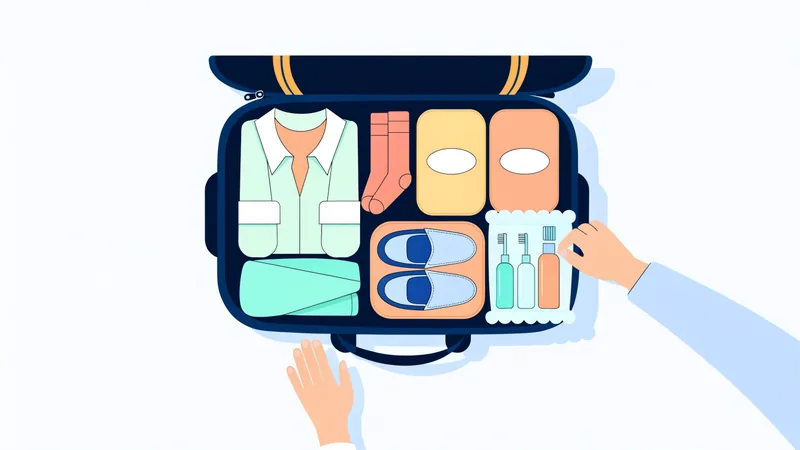
- Heavy, bulky items at the bottom (the wheel-end on a roller): shoes, jeans, toiletry bag. Keeping weight low and near the wheels makes the bag stable and easy to roll.
- Rolled soft clothes next, filling the gaps around and between the heavy items so nothing shifts.
- Folded dressy clothes on top, last and least compressed, so they arrive crisp.
- Shoes along the sides, soles in shoe bags, with socks and small items stuffed inside them to use every inch.
- Liquids in a leakproof bag, in an outer pocket or a separate layer — and in a quart-size 3-1-1 bag if you're carrying on (3.4 oz / 100 ml containers).
Where do shoes go in a suitcase?
At the bottom, near the wheels, so their weight sits low and stable. Put each pair in a shoe bag (or a plastic bag) to keep soles off your clothes, and stuff socks, chargers, or small rolled items inside the shoes so that space isn't wasted. And be ruthless about the number of shoes — they're the biggest space-and-weight hog, so most trips need only one or two pairs plus the ones you wear.
The packing "rules," decoded
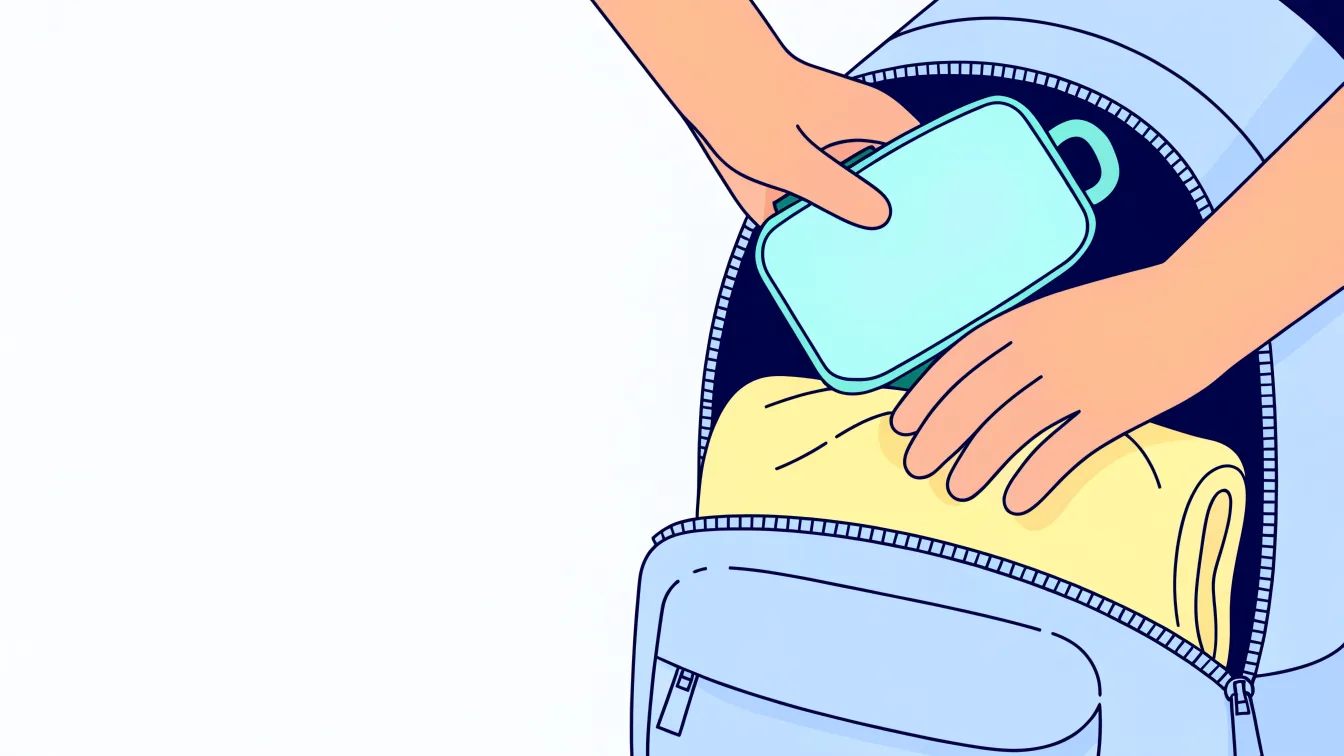
These popular heuristics all do the same thing — force a mix-and-match capsule so you pack less and still have outfits. Treat them as guidelines, not laws:
- The 3-3-3 rule: pack 3 tops, 3 bottoms, and 3 pairs of shoes (some versions use 3 of each clothing category). A tight minimalist capsule that fits a carry-on with room to spare.
- The 5-4-3-2-1 rule: roughly 5 tops, 4 bottoms, 3 accessories, 2 pairs of shoes, and 1 hat or bag — a week-long capsule that still fits a carry-on.
- The 3-5-7 rule: a capsule-count variant (a set number of tops, bottoms, and other pieces, e.g. for a cruise) — like the others, it's a way to cap how much you bring and plan around recombining pieces.
The real lesson behind all of them: plan full outfits that share a color palette and recombine, rather than tossing in individual items and hoping. Nail that and any of these "rules" just falls out naturally.
How to pack light (the principles that actually work)
- Pack outfits, not items. Lay out complete outfits for the trip, then pack only those. It kills the "I might wear it" pile instantly.
- Stick to a neutral, mix-and-match palette so most tops go with most bottoms and you need fewer of each.
- Wear your bulkiest items on the plane — the heavy jacket, the boots — instead of packing them.
- Limit shoes to one or two pairs plus the ones you wear; they're the biggest weight and space cost.
- Do laundry on longer trips. A two-week trip needs about the same as a one-week trip plus a laundry stop, because you re-wear clothes.
- Choose wrinkle-resistant fabrics — merino wool, knits, and technical travel fabrics pack small and shrug off creases.
- Leave room for what you bring back — souvenirs, or just the disorganization of the return trip.
Packing wrinkle-free
- Roll knits and casual clothes — they crease least this way.
- Fold dressy items flat with tissue paper between the folds to soften creases, or use a garment folder.
- Use a garment bag for suits and dresses (see our garment bags guide) — the fewer folds, the fewer wrinkles.
- On arrival, unpack and hang immediately, and hang anything creased in the bathroom while you run a hot shower — the steam relaxes light wrinkles without an iron.
Don't-forget logistics
- Start a few days early, not the night before — it turns frantic cramming into calm editing.
- Keep a "morning-of" list for the things you can't pack ahead: phone, charger, wallet, keys, passport, medications. Check it twice before you walk out.
- The most-forgotten items are chargers and adapters, medications, a toothbrush, and — somehow — enough underwear. Build them into your list first.
- Keep valuables and must-haves in your carry-on or personal item, never in a checked bag or anything you might have to gate-check: medications, documents, electronics, and lithium batteries or power banks (which are prohibited in checked luggage anyway).
Frequently asked questions
Is it better to roll or fold clothes when packing?
Both, depending on the garment. Roll casual and knit items — t-shirts, jeans, activewear — because rolling saves space and causes fewer deep creases. Fold structured and dressy clothes — dress shirts, trousers, blazers — flat along their natural lines, since those wrinkle worse when rolled or crushed. The best approach mixes the two: roll the casual layer, fold the dressy pieces on top, and use packing cubes to keep it all organized.
What is the 5-4-3-2-1 packing rule?
It's a popular capsule-packing guideline: roughly 5 tops, 4 bottoms, 3 accessories, 2 pairs of shoes, and 1 hat or bag — enough for about a week in a carry-on. Like the similar 3-3-3 rule, its real purpose is to force you to plan mix-and-match outfits that recombine, so you pack far less while still having plenty to wear. Treat it as a helpful guardrail, not a strict law; adjust the counts to your trip.
Where do shoes go when packing a suitcase?
At the bottom of the bag, near the wheels, so their weight sits low and keeps the suitcase stable and easy to roll. Put each pair in a shoe bag to keep the soles off your clothes, and stuff socks or small items inside the shoes to use that space. Limit yourself to one or two pairs plus the shoes you wear traveling, since footwear is the biggest space and weight cost in most bags.
What should you not pack in a carry-on?
Two things: liquids over 3.4 ounces / 100 ml (they must fit the 3-1-1 rule or go in a checked bag), and — the reverse problem — anything you can't afford to lose if the bag gets gate-checked. Keep medications, documents, electronics, valuables, and lithium batteries or power banks with you, since power banks are actually prohibited from checked luggage. Also check your security agency's current list of prohibited items before packing anything questionable.
How do you pack a suitcase to avoid wrinkles?
Roll knits and casual clothes (they crease least), fold dressy items flat with tissue paper between the folds, and use a garment bag for suits and dresses so they barely fold at all. Lay the folded dressy pieces on top where they're least compressed. Then, as soon as you arrive, unpack and hang everything, and steam out any light wrinkles by hanging the garment in the bathroom during a hot shower. Choosing wrinkle-resistant fabrics like merino wool helps most of all.
How do you fit a week's clothes in a carry-on?
Plan outfits instead of packing individual items, stick to a neutral mix-and-match palette so pieces recombine, and limit shoes to one or two pairs. Roll casual clothes and use packing cubes (compression cubes if you need to fit more), wear your bulkiest items on the plane, and do a load of laundry if the trip runs long. A capsule of a few tops, a couple of bottoms, and layers covers a surprising number of outfits when everything coordinates.
Guides in this section
6 guides sit under this page.
Guides
Packing for a beach vacation
Packing for a camping trip
Packing for a ski trip