Tactical and military bags: types and features
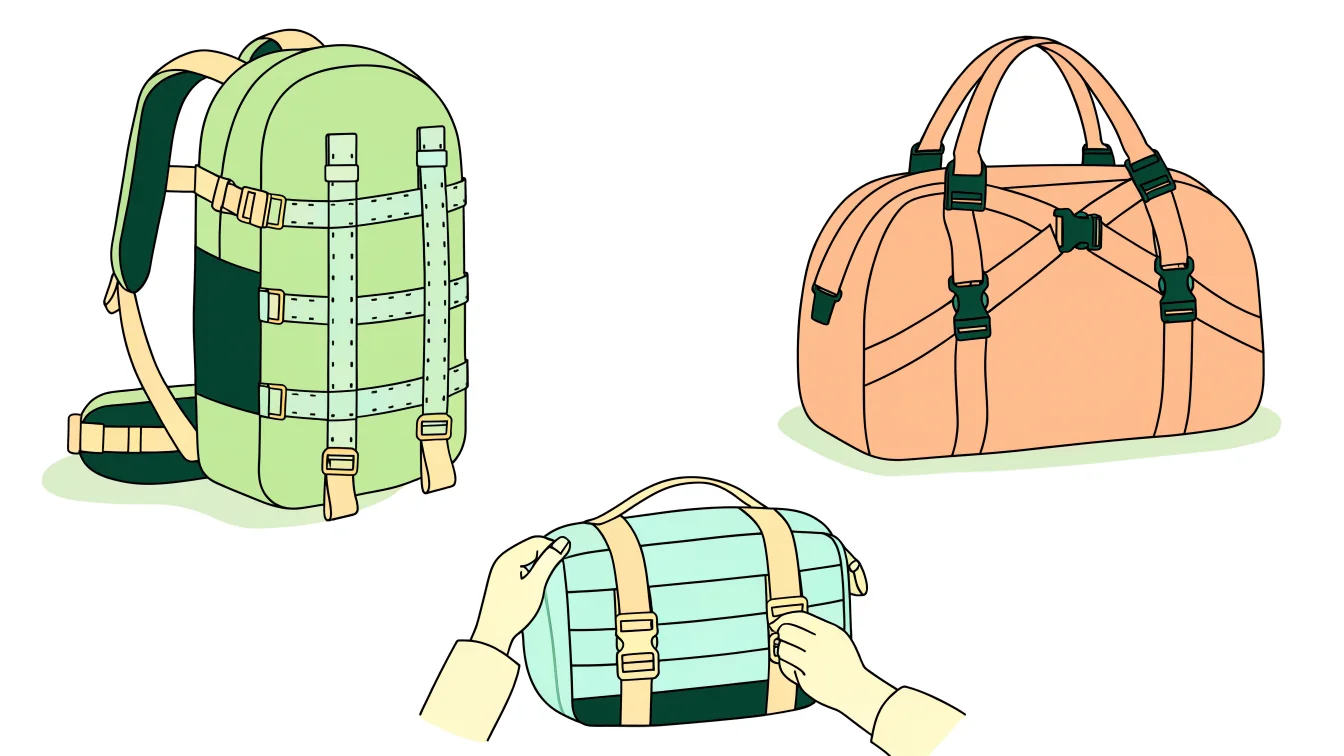
Tactical bags are equipment carriers that often emphasize modular pouches, rugged fabric and secure closures. Choose one by actual load, dimensions and carry comfort, not by the number of attachment loops. For everyday use, a simpler backpack may fit better.
What makes a bag tactical?
The word "tactical" is a style label, not a certified standard, and it tells you little about the limits that matter. In shopping terms, the label usually points to equipment organization and attachment options.
Examine what those features do for your actual contents. A pouch grid is useful only when you have suitable accessories to attach.
Separate appearance from construction. Compare the frame, harness adjustment, opening and internal arrangement before looking at colors or patch panels. A plain version and a camouflage version can have the same practical limits.
The military terminology also needs context. The PEO Soldier factsheet describes an integrated modular equipment system with compatible components.
A commercial backpack borrowing an attachment pattern is not automatically equivalent to that entire system. PEO Soldier factsheet, archived copy
Types of tactical bags
| Style | Best fit | Main advantage | Trade-off |
|---|---|---|---|
| Compact daypack | Workday or short outing | Small footprint and organized storage | Limited bulky-gear space |
| Mid-size modular backpack (often sold as an assault pack) | Daily gear with optional pouches | Expandable arrangement | Extra attachments add weight |
| Larger load-hauling pack | Multi-day nontechnical travel or field use | More room and support options | Heavier and less convenient daily |
| Duffel | Vehicle transport and bulkier kits | Wide opening | Less comfortable for long carries |
| Sling bag | Minimal quick-access load | Compact movement | Uneven one-shoulder load |
| Small attachable pouch | Separating accessories | Modular organization | Needs compatible mounting |
| Range bag | Carrying ear and eye protection, targets and accessories to a range | Wide opening and separate pockets for small items | Heavy when full; usually hand or shoulder carry |
Commercial tactical bags borrow features from military gear. Some are ordinary backpacks with webbing and extra pockets; others have harnesses for heavier loads.
A compact daypack works well when the load consists of ordinary daily essentials. A larger pack gives more space, but the extra volume invites unnecessary packing. Choose the smallest practical size that carries the intended contents without forcing closures.
Large duffel bags offer wide access to bulky items. They may suit storage or vehicle travel better than long walks. Before choosing one, check carrying handles, shoulder strap options, dimensions and the difficulty of lifting a densely packed bag.
MOLLE and PALS explained
MOLLE means Modular Lightweight Load-Carrying Equipment. PALS means Pouch Attachment Ladder System.
MOLLE is the whole system and PALS is the webbing grid on the bag; one maker's MOLLE explainer and the PEO Soldier factsheet, archived copy draw the same line.
A compatible pouch attaches by weaving its straps through the webbing grid, following the maker's instructions. Done right, it sits close to the pack and is less likely to swing.
To check compatibility, compare the webbing spacing, the attachment method and any load recommendations. A marketing reference to modular design is not proof that every accessory will fit.
| Term | Meaning for a shopper | What it does not promise |
|---|---|---|
| MOLLE | Modular attachment approach | A universal weight rating |
| PALS | Repeating webbing attachment grid | Compatibility with every pouch |
| Laser-cut slots | Alternative attachment surface | Equal durability to woven webbing |
| Compression straps | Help control pack shape | Higher safe maximum load |
| Hydration sleeve | Space for a compatible reservoir | Inclusion of a reservoir |
| Lockable zipper pulls | May accept a separate lock | Theft-proof storage |
Adding pouches creates new choices about balance and access. Keep frequently used small objects where they can be reached easily. Avoid building a bulky external load that catches on doorways or pushes the pack away from the body.
Assault packs
An assault pack is a backpack format associated with carrying a selected equipment load. Commercial versions may add everyday features such as a laptop sleeve. The name does not prescribe one capacity or guarantee a particular number of days outdoors.
One maker states 27 liters for one version and 35.8 liters for another. These are individual model specifications, not a universal definition. Smaller example; larger example.
For everyday use, check whether internal pockets suit the items you carry most often. A narrow organizer can be useful for small accessories but awkward for a lunch container. Try the main opening with those compartments occupied.
Look closely at the harness size as well as the body volume. Adjustment should suit your torso and intended clothing layers. A large external silhouette does not tell you whether the suspension fits.
Consider whether you need the exterior attachments at all. Keeping the load inside can make a pack easier to handle in doorways and shared spaces. Add a pouch to solve a named storage problem, then reassess access and balance.
Range bags
A range bag organizes equipment for a visit to a shooting range. Start with ear and eye protection, permitted accessories and any cases required for your equipment. Follow the venue's rules and the relevant transport requirements.
One maker describes a side-opening bag that becomes an accessible work surface. Another lists external accessory pockets for optics and ear protection.
These layouts illustrate different ways to reach small items without emptying the main compartment. Side-opening example; pocketed example.
Keep the bag's purpose separate from permission to carry its contents. A lockable fabric zipper is not the same as a hard-sided transport case. Check required containers before deciding which outer bag will hold them.
As one example, American Airlines requires firearms to be unloaded, declared and placed in a locked hard-sided container in checked baggage (checked November 2026). Check the operating airline and destination requirements before travel. Airline firearms policy
If a range bag also serves as a travel bag, empty and check every pocket before you pack for a flight. A dedicated range bag avoids the problem.
Capacity: liters by format and by load

The ranges below span the cited examples. They are not industry standards, recommendations for a fixed trip duration, or load ratings. Compare the actual dimensions and empty weight as well as liters.
| Format | Range across the cited examples | Maker-stated endpoints | Practical comparison |
|---|---|---|---|
| Assault pack | 27–35.8 L | One maker states 27 L and 35.8 L | Check harness fit and rigid-item clearance |
| Range bag | 18–43 L | One maker states 18 L; another states 43 L total | Check which pockets contribute to total capacity |
| Duffel | 40–56 L | One maker states 40 L and 56 L | Check the lift and intended carrying method |
A total capacity can include pockets that will not accept a bulky case. Do not assume that all listed liters form one uninterrupted cavity. Lay out the rigid items before comparing the soft clothing or accessories that can fill remaining gaps.
For a duffel, assess the full lift from the floor and into its storage position. Carry straps do not reduce the weight of the contents. Choose a manageable arrangement before filling a larger bag simply because space remains.
Published liter capacities can help compare pack size, but they do not tell you how a stiff object fits. Measure laptops, hard cases, hydration containers and long items separately. Compare the main cavity's usable measurements and shape with those objects.
| Intended load | Practical starting point | First question |
|---|---|---|
| Minimal daily carry | Compact pack | Does it fit the actual essentials? |
| Daily kit plus outerwear | Mid-size pack | Is the empty weight reasonable? |
| Overnight essentials | Medium backpack or duffel | How will clothing and gear separate? |
| Bulky multi-day kit | Larger supported pack | Does the harness suit the total load? |
For heavy loads, look for a maker's stated load limit and harness details. A sturdy look is not a weight rating. The weakest attachment point may be a handle, strap anchor or accessory attachment.
Materials and weather resistance
These are examples of published construction, not a ranking of toughness. One maker's specification cannot establish the performance of every bag using the same material. Seams, reinforcement and hardware remain separate inspection points.
| Component | What one maker states | What the information does not establish |
|---|---|---|
| Nylon duffel shell | Water-resistant 1050D nylon. Specification | Waterproof performance of the complete bag |
| Coated polyester range-bag shell | 600D polyester with TPE coating. Specification | A certified load rating or sealed closures |
| Backpack frame sheet | Full-length plastic frame sheet. Specification | Suitability for every torso or equipment load |
| Attachment webbing | PEO Soldier describes rows of heavy-duty nylon on load-carrying platforms. Factsheet | Automatic compatibility or strength of every commercial attachment |
Inspect the parts that contact your body and storage surfaces. A fabric specification cannot tell you whether a buckle presses against your hip. Likewise, a reinforced base should be assessed with the load arranged as you intend to carry it.
Tactical bags are usually nylon or polyester with reinforced panels and abrasion-resistant face fabric. The exact construction matters more than the category label. Compare base reinforcement, exposed seams, zipper placement and areas that rub against clothing or a vehicle.
A high denier number alone does not tell you how a bag holds up; seams and zipper openings can still be weak points. See bag materials for what denier measures. Look for specifications about coatings, abrasion testing and warranty coverage when provided.
Water-resistant fabric may shed some rainfall without protecting the contents through a long storm. Stitching, zippers and attachment slots create potential paths for water. When exposure matters, consider a separate dry liner or a genuinely rated waterproof system.
Do not assume a tactical pack is puncture-proof, slash-proof or waterproof unless its maker states and tests the claim. A stiff back panel or reinforced base is not a protective case.
Comfort matters more than styling
Some packs use broad padded shoulder straps and sternum straps; others prioritize a compact profile. For long walks, examine torso fit, weight distribution and how close the pack sits against the back. A hip belt helps only when it fits and is built to carry weight, not just to stop the pack swinging.
Avoid hanging the heaviest accessories far from the body. External weight can alter balance, snag against surroundings and fatigue the user. Pack stable dense objects closer to the back, subject to the manufacturer's instructions and the shape of the equipment.
Raised back panels create an airflow gap, but a heavy load still builds heat and pressure. No fabric spec can promise comfort for every body shape.
Tactical versus outdoor versus work backpacks
A hiking backpack may offer better torso adjustment and load transfer for long trail walks. A work backpack can offer more discreet laptop storage. A tactical pack can suit modular accessories, but exterior webbing adds little if those accessories will never be used.
| Priority | Consider first | Why |
|---|---|---|
| Office laptop access | Work backpack | Purpose-built device compartments |
| Long trail carry | Hiking backpack | Fit and suspension options |
| Modular small pouches | Tactical backpack | Attachment surfaces |
| Bulky vehicle storage | Duffel | Large opening |
| Minimal day errands | Small everyday pack | Lower bulk |
Compare dimensions and real functions, not looks. Black fabric and a patch panel are not performance specs. A less complicated design may save weight, money and time spent searching through compartments.
Care and inspection
Brush grit out of external webbing and slots. Check maker instructions before washing coated fabrics or foam-backed harness parts.
Clean zippers gently and allow the pack to dry fully. Removing attached pouches can expose areas that collect dust and moisture.
Inspect the underside of straps, webbing anchors and seams after heavy use. A torn mounting panel or split load-bearing seam affects how safely the bag can carry its contents. Do not rely on decorative stitching to repair a structural attachment point.
Keep the bag organized around its real use. Removing an unused pouch may improve weight balance and access more than adding another organizer. Modularity is useful because it can be reduced as well as expanded.

FAQ
What does MOLLE mean on a backpack?
MOLLE is a modular load-carrying system: pouches weave their straps through PALS, a webbing grid on the pack, as one maker's MOLLE page explains. Check both makers' fit instructions. The word MOLLE is not a weight rating.
Are tactical backpacks waterproof?
Not automatically. Some materials resist water, but seams, zippers and attachment points affect overall protection. Look for explicit manufacturer claims about the assembled bag and use appropriate additional protection when necessary.
Is a tactical backpack good for everyday use?
It can be, especially if you value compartments or modularity. But a conventional backpack may weigh less and suit office or commuter settings better. Compare actual size, device fit and carrying comfort.
How many liters should a tactical backpack have?
It depends on the load. In the maker examples cited above, assault packs run 27 to 35.8 liters and duffels 40 to 56 liters. Use liters as a starting point, then measure bulky items and check the maker's load limit.
Can I attach any pouch to MOLLE webbing?
No, because attachment systems vary. Confirm spacing, mounting method and maker compatibility. Even a physically attached pouch can be unsuitable if it swings, obstructs access or overloads part of the bag.
Related guides
- Backpacks for everyday and commuter packs
- Hiking backpacks for long trail carries
- Duffel bags for vehicle and gear hauling
- Work bags for office laptop carry
- Bag construction for seams and reinforcement
- Bag materials for fabrics and denier
- Bag care for cleaning and drying
Guides in this section
2 guides sit under this page.
Guides

History

Sources
- 511tactical.com/how-does-molle-work
- ciehub.info/References/peosoldier.army.mil/Factsheets/PMSPIE/SPIE_SCIE_MOLLE_2010-05.pdf
- mysteryranch.com/2-day-assault-pack
- mysteryranch.com/3-day-assault-bvs-pack
- helikon-tex.us/range-bag-cordura.html
- 511tactical.com/range-ready-bag.html
- aa.com/web/i18n/travel-info/baggage/firearms-and-ammunition.html
- 511tactical.com/rush-lbd-mike.html
- 511tactical.com/rush-lbd-lima.html