Messenger Bags: Are They Still Cool? (And How to Choose One)

The messenger bag has a reputation problem and a real case, and both are worth being honest about. It had a moment — the mid-2000s to mid-2010s, when every commuter and startup guy had one — and then backpacks quietly took over. So the fair question isn't just "which messenger should I buy?" but "should I carry one at all?" This guide answers both: what the messenger does better than anything else, whether it's still stylish, and how to pick a good one.
We won't hand you a ranked ten we supposedly tested. Instead: the honest style verdict, what a messenger is actually for, how it stacks up against a backpack and a briefcase, and the materials and features that separate a keep-forever bag from a sag-in-a-year one.
What a messenger bag is (and where it came from)
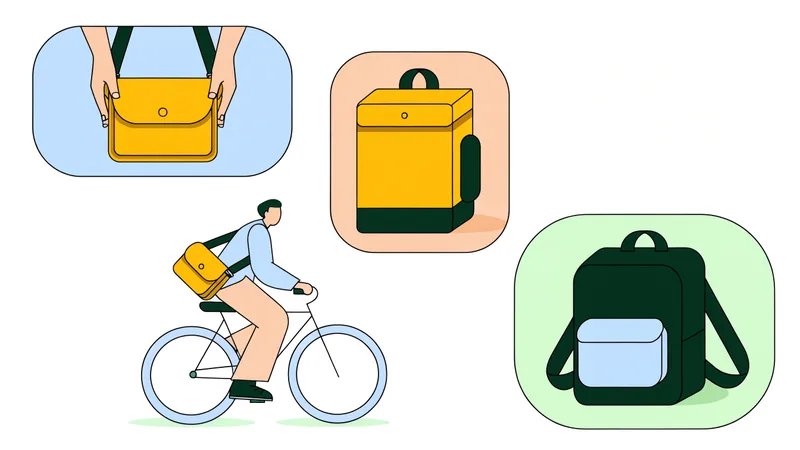
A messenger bag is a single-strap bag worn across the body, rectangular, with a flap that folds over the top and usually a laptop-friendly interior. You wear it crossbody and swing it around to your front to get into it — no taking it off.
The name is literal: these are descended from the tough, weatherproof bags bike messengers and couriers used to haul deliveries around cities. That heritage explains the whole design — quick access on the move, a protective flap against rain, and a durable build. It's a working bag that grew into an everyday and professional one.
Are messenger bags still in style? The honest answer
Mostly yes — with a caveat. The messenger isn't at the peak ubiquity it had a decade ago; backpacks won the commuting mainstream because two straps are easier on your back for heavy laptop loads. If you're asking whether the messenger is the single trendiest bag of the moment, it isn't.
But "not peak trendy" is very different from "out of style." A good leather or waxed-canvas messenger is a timeless professional-casual classic — the kind of bag that looks better with age and never reads as dated the way a fad does. And it's still genuinely current in specific worlds: creative and media fields, photography (the camera messenger is a staple), cycling, and among anyone who wants quick laptop access with a sharper look than a backpack. Buy a messenger because it fits how you carry and the look you want — not because a trend cycle told you to, and not because one told you not to.
What a messenger bag is actually for
The messenger earns its place on a few specific strengths:
- Quick access. Swing it to your front, flip the flap, and you're in — no unshouldering, no setting it down. Ideal for transit, cycling, and in-and-out days.
- A professional-casual look. It reads sharper and more grown-up than a backpack but more relaxed than a briefcase — a genuine middle ground.
- Laptop protection with easy carry. A padded compartment plus a one-motion carry, lighter and quicker than wrangling a backpack in a crowd.
- The heritage/style factor. A well-made leather or canvas messenger simply looks great, and it ages into something better.
If those match your day, the messenger isn't a nostalgia buy — it's the right tool.
Messenger vs. backpack vs. briefcase

Where the messenger sits among work bags:
- Messenger vs. backpack: the backpack wins on carrying heavy loads and on your back and posture (two straps beat one), which is exactly why it took over commuting. The messenger wins on quick access and a sharper look. If you haul a lot every day, backpack; if you want speed and style with a moderate load, messenger.
- Messenger vs. briefcase: the briefcase is more formal and structured (handle-carried, boardroom-ready); the messenger is softer, hands-free, and more casual. In relaxed and creative offices the messenger reads better; in traditional formal ones the briefcase still wins. (See our work & business bags guide for the full dress-code breakdown.)
- Messenger vs. crossbody: a messenger is essentially a larger, more utilitarian crossbody — bigger, flapped, and laptop-capable, where a crossbody is a smaller purse-style bag. (Full guide: crossbody bags.)
The one honest downside
Like any single-strap bag, a messenger puts the whole load on one shoulder. For a laptop and daily essentials that's fine; for a genuinely heavy haul over a long walk, it'll tire you in a way a backpack won't. Cyclists should also look for a stabilizer / cross strap to stop the bag swinging when they ride. Neither is a dealbreaker — just match the bag to your load, and don't buy a messenger to carry a week of gear.
Materials and how long a messenger lasts
Material sets a messenger's whole character and lifespan (full detail in our materials guide):
- Full-grain leather — the investment: dressy, ages beautifully, and with basic care a quality full-grain leather messenger genuinely lasts for decades (leather is where the "buy it for life" reputation comes from). Heavy and pricey.
- Waxed canvas — rugged, handsome, and water-resistant, with a heritage look; re-waxable and very durable.
- Ballistic nylon — the durable, lighter, more technical option for a modern tech bag; takes abuse and shrugs off weather.
- Polyester — the budget choice: fine for light use, wears out faster.
The rule of thumb: a full-grain leather or waxed-canvas messenger is a long-term keeper; nylon is the practical workhorse; cheap polyester is the one you'll replace.
How to choose a messenger bag
Four quick decisions: What will you carry? (size it to your laptop plus daily essentials — a 13", 15", or 16" laptop drives the dimensions; check internal sleeve size, per our laptop bags guide). Where will you take it? (commute, office, bike, camera work — sets the durability and features you need). Which material? (leather or waxed canvas for looks and longevity, nylon for light practical use). Is it comfortable? (a padded, adjustable strap matters most, since it all rides on one shoulder). Nail those and you'll have a bag that quietly outlasts every trend conversation.
Frequently asked questions
Are messenger bags still in style?
Mostly yes — just not at the peak popularity they had a decade ago, before backpacks took over mainstream commuting. A good leather or waxed-canvas messenger is a timeless professional-casual classic rather than a trend piece, and it stays genuinely current in creative fields, photography, cycling, and among anyone wanting quick laptop access with a sharper look than a backpack. It's a classic, not a fad, so it doesn't really go "out."
What's the point of a messenger bag?
Quick, hands-free access and a professional-casual look. You wear it across your body and swing it to your front to get in — no taking it off — which is ideal for transit, cycling, and in-and-out days. It carries and protects a laptop, reads sharper than a backpack but more relaxed than a briefcase, and (in leather or canvas) simply looks good. It's the middle ground between a backpack and a briefcase.
Do men use messenger bags?
Yes — the men's messenger is one of the biggest parts of the category, though the bag is genuinely unisex. It's a longtime favorite for men who want a professional-casual work bag that isn't a backpack or a formal briefcase, especially in leather or waxed canvas. Plenty of women carry them too; the design and criteria are the same regardless.
How long do leather messenger bags last?
A quality full-grain leather messenger, cared for reasonably, can last for decades — this is exactly where leather's "buy it for life" reputation comes from, since good leather ages into a better-looking patina rather than wearing out. Lower leather grades (genuine or bonded) won't last nearly as long. Keep it conditioned and dry (see our care guide) and a full-grain bag can outlast many of the laptops you carry in it.
Is a messenger bag or a backpack better?
It depends on your load and priorities. A backpack is better for carrying heavy loads and for your back and posture, thanks to two straps — which is why it dominates commuting. A messenger is better for quick access and a sharper, more professional-casual look, with a moderate load. Carry a lot every day? Backpack. Want speed and style with a laptop and essentials? Messenger.
What's the difference between a messenger bag and a crossbody bag?
They're related — both are worn across the body on a single strap — but a messenger is larger, more utilitarian, and laptop-capable, with a flap over the top, descended from courier bags. A crossbody is smaller and more of a purse-style everyday bag. Think of a messenger as a big, work-oriented crossbody: same across-the-body carry, more capacity and structure.
Guides in this section
3 guides sit under this page.