Best waterproof backpacks
We may earn a commission when you buy through links on this page. It never changes what a guide says. How this works.
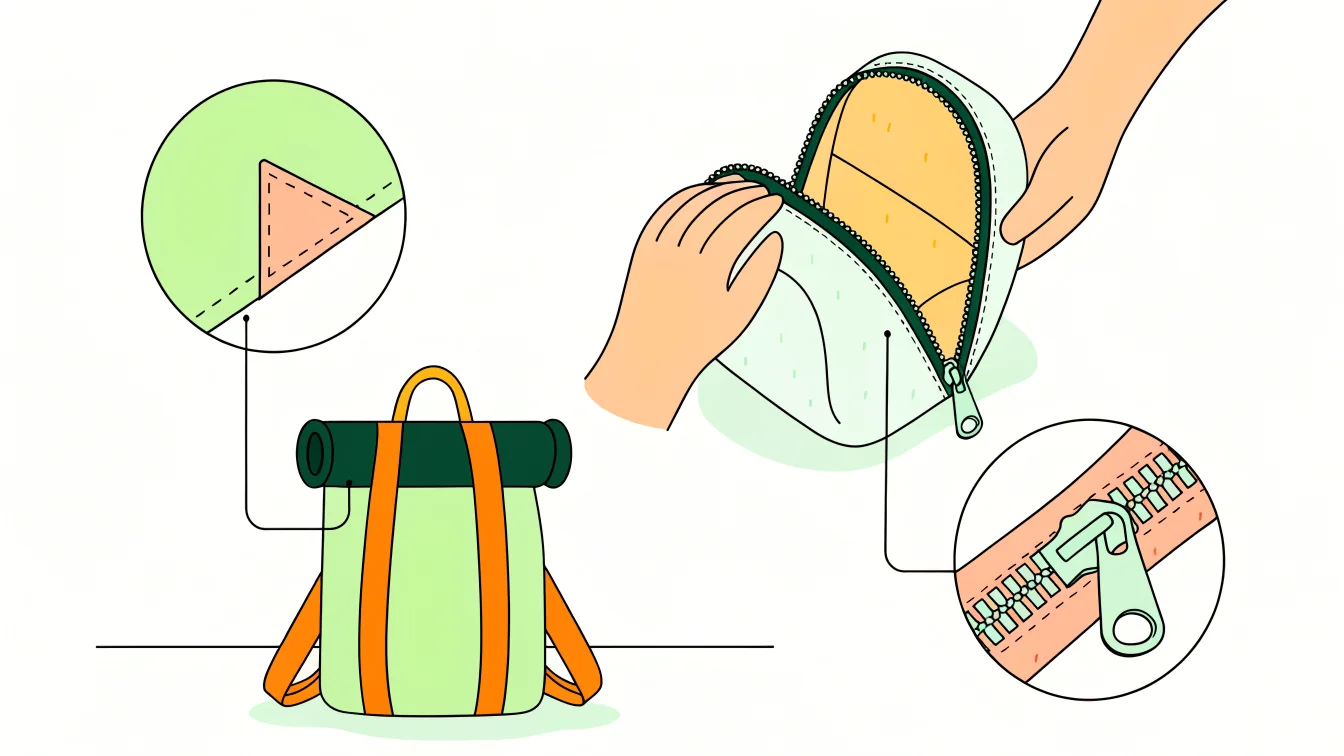
The best waterproof backpacks state what water they are built for: rain, splashes or immersion. None of the three picks here is rated for immersion; they are for rain and splashes. Waterproof fabric alone does not keep a whole pack dry.
Quick picks
| Pick | Best for | Key spec | Price tier |
|---|---|---|---|
| Sea to Summit Big River Dry Backpack 30L | Simple roll-top storage | 30L; taped seams; waist strap, no hipbelt | $$ |
| ORTLIEB Light-Pack | A light pack for rain and splashes | 25L; 11.6 oz; IP64 | Not shown |
| NRS 65L Bill's Bag | Larger loads and a removable carrying harness | 65L closed volume; 3.8 lb; fold-down closure | $$$ |
Confirm stock and the exact size and color before ordering. Our waterproof-bag guide explains why different kinds of water exposure require different claims.
How we chose
Bags.net has not tested these backpacks. Picks come from the makers' published specs, closure guidance and a product datasheet: documented protection, seam construction, capacity and carrying features. Tiers use each maker's US list price: $ under $50, $$ $50–$149, $$$ $150–$299, $$$$ $300+.
This list has three picks, not five, because we include only packs whose specs we could confirm on the maker's own US page. ORTLIEB's US page shows only a sale price, not a list price, so its tier reads "Not shown." We report IP ratings only where the maker states them. We do not infer submersibility from product names, fabric or photos.
What to look for in the best waterproof backpacks
| Pack | Stated protection | Seams | Closure | Capacity | Weight |
|---|---|---|---|---|---|
| Big River 30L | No IP rating; 10,000 mm fabric head | Stitched and taped | Roll-top | 30L | 23.8 or 23.6 oz |
| ORTLIEB Light-Pack | IP64 (splash water) | Welded, per ORTLIEB's brand-wide statement | Roll-top, at least 3–4 rolls | 25L | 11.6 oz |
| NRS 65L Bill's Bag | No IP or immersion rating listed | — | Fold-down, at least three folds per NRS | 65L | 3.8 lb |
The complete protection claim. Read the maker's conditions, including the closure method.
Sea to Summit explains that fabric resistance is only part of protection: water can enter a roll-top closure under pressure. A fabric number should not be converted into an immersion rating for the whole bag.
Seams as well as fabric. Look for a clear construction description. ORTLIEB says it welds its seams, while the Big River page describes stitched and fully taped seams.
These are different methods. Neither detail, taken alone, tells you the permitted depth or duration underwater.
Room to close the bag correctly. Leave enough space for the required folds or rolls.
An overfilled pack can hold the gear and still leave too little top to roll. Judge capacity with the bag closed.
A harness that suits the carry. Decide whether you need a compact daypack or a larger gear-hauling bag.
Compare the actual loaded fit rather than assuming waterproof construction makes a good hiking suspension. Our bag-construction guide helps separate materials, seams, and carrying components.
Two roll-top approaches to rain and splashes
Sea to Summit Big River Dry Backpack 30L: for simpler gear storage
The 30L Big River has fully taped seams, 420-denier nylon, and a roll-top closure. It has a waist strap rather than a hipbelt, and no internal pockets. Manufacturer list-price tier: $$.
Consider it when you want a simple main compartment and can organize smaller items separately. This is the 30L option; do not transfer its tier or dimensions to a larger variant.
Watch out for: Sea to Summit gives no IP rating, only a 10,000 mm hydrostatic head for the fabric, and its waterproofing explainer says its dry bags are not suitable for submersion use. The product page also calls the harness adjustable in one place and non-adjustable in its FAQ. Ask the maker if that matters to you.
ORTLIEB Light-Pack: for low empty weight
The Light-Pack lists 25L, 11.6 oz, and a 13.2 lb maximum payload. Its datasheet specifies IP64 with the closure rolled three to four times. List-price tier: Not shown, because ORTLIEB's US page shows only a sale price.
Compare it when a light, simple pack suits the contents and expected weather. Its removable chest and waist straps offer a different arrangement from a heavily structured hiking pack.
Watch out for: IP64 means protected against splash water, not immersion, so do not plan to submerge it. The published payload is a ceiling, not a promise that every wearer will find that load comfortable.
A larger dry bag with backpack straps

NRS 65L Bill's Bag: for gear hauling
The 65L Bill's Bag lists 3.8 lb, a removable backpack harness, and four compression straps. NRS measures its 65L capacity with the bag filled and rolled closed. Manufacturer list-price tier: $$$.
Compare it when the equipment genuinely needs the larger space. The removable harness helps for short carries between vehicle, landing and camp.
This is a different purchase from a compact daypack, so lay out the actual equipment and check access after the bag is closed. One big compartment swallows bulky gear but hides small items; plan on pouches if that bothers you.
Watch out for: NRS does not list an IP or immersion rating for it. Do not assume a fold-down closure makes it submersible. The maker's closure instructions remain essential.
Closing and maintaining a waterproof backpack
Use the instructions for the exact closure. NRS advises folding its dry-bag opening at least three times, then fastening the closure.
Other makers give different fold or roll counts; ORTLIEB, for example, ties the Light-Pack's IP64 rating to rolling the closure at least 3–4 times. Do not swap one maker's procedure for another's without checking.
Inspect the fabric, coating and closure before use. If a seam, coating, or closure needs repair, consult the maker's guidance rather than assuming that any adhesive or spray is suitable.
Our bag-care guide covers general upkeep, but follow the manufacturer's directions for the waterproof components.
Which one should you buy?
Start with the expected exposure. None of these three packs carries a maker-stated immersion rating, so if you need to submerge a bag, look for a maker that states one and its exact conditions.
For rain and splashes, the Light-Pack is the light option with explicit closure instructions. The Big River is worth comparing when a simple roll-top compartment suits the equipment. Keep its submersion limits in mind.
Choose the Bill's Bag when you have 65L of gear to move. It is not a daypack substitute. Check the carrying arrangement and closed dimensions against the actual trip.
Finally, decide how often you need access. Every opening means closing the bag correctly again. Keep often-used items near the top, and read the maker's instructions before trusting electronics to any of them.
FAQ
Are all waterproof backpacks submersible?
No. The best waterproof backpacks state their limits: the Light-Pack datasheet rates it IP64, which covers splash water, and Sea to Summit says its dry bags are not suitable for submersion use.
Compare those conditions directly instead of treating “waterproof” as a universal promise. A rain-oriented pack and a submersible pack can be appropriate for different tasks.
Does a high fabric waterproof rating prove the whole bag is waterproof?
No. Sea to Summit explains that the closure can limit protection even when the fabric resists considerable water pressure. Seam construction and correct closing also matter.
Look for a whole-bag rating such as an IP code, not a fabric number.
Are welded seams always better than taped seams?
They are different construction methods, and neither maker here publishes a comparison between them. Look at the complete bag's documented protection and care requirements.
The presence of either method does not, by itself, establish comfort, lifespan, or an immersion rating. Choose based on documented suitability for your intended exposure.
Can I put electronics inside a roll-top backpack?
Yes, with a second layer of protection. Sea to Summit says double-bagging sensitive or electronic devices is essential. Do not treat a general waterproof label as a promise that an expensive device remains protected under every condition.