Paper vs plastic vs cotton: which bag has the smallest footprint?

For paper vs plastic bags, including cotton changes the answer: no material has the smallest footprint under every scenario. Keep using a suitable carrier you already own. Compare new bags by the shopping they actually replace, the impacts measured, and local disposal options.
Compare paper vs plastic bags on the same job
First define what you need the bag to do. Carrying the same shopping home is a fairer question than comparing one bag against another.
Singapore's NEA made that distinction in its 2018 study. Researchers packed a representative shopping load to establish different bag requirements. NEA assessment factsheet
Use these attributes to organize your own decision. The table describes questions to ask, rather than universal material scores.
| Attribute | Paper carrier | Plastic carrier | Cotton tote |
|---|---|---|---|
| Starting point | Existing bag or newly supplied bag? | Existing film bag or new durable carrier? | Already owned or another new tote? |
| Useful capacity | Will this size hold the planned items? | Does the actual carrier suit the load? | Will the tote carry a useful share? |
| Reuse plan | Another shopping trip or storage job? | Repeated shopping or another genuine use? | Routine shopping over an extended period? |
| Climate comparison | Specify study and scenario | Separate thin film from durable designs | Specify construction and assumed use count |
| Local permission | Check checkout rules | Check material and distribution rules | Check any applicable business requirements |
| End of use | Ask whether this bag is accepted | Ask for the correct collection route | Ask about textile reuse or collection |
Our sustainable bags guide provides context for evaluating a bag beyond its material name.
What the named studies actually show
In the UK Environment Agency's 2011 model, paper needed three uses and cotton needed 131 to beat unreused HDPE on global warming potential. Those figures describe that scenario, not all environmental effects. 2011 report
The Danish EPA's 2018 assessment instead used an LDPE reference bag, including subsequent waste-bin use. Its conventional cotton climate figure was 52 reuses. 2018 report
Singapore's 2018 NEA findings favored reusable carriers under its annual shopping assumptions and incineration context. The reusable bags studied were polypropylene and nylon; these findings are not a cotton-specific promise. NEA factsheet
These results cannot be averaged into one worldwide ranking. They ask different questions about different carriers and waste systems. That is the interpretation to carry into a purchase decision.
ISO 14040 places goal, scope, inventory, impact assessment, and interpretation within the LCA framework. Start with the study's question before looking for its winning material. ISO
For a closer explanation of thresholds, see how many times to reuse a tote.
Choose paper if it solves a specific carry job
Consider paper when it is an available, lawful carrier that meets your immediate need. Before accepting it, ask whether an existing bag could do the same work.
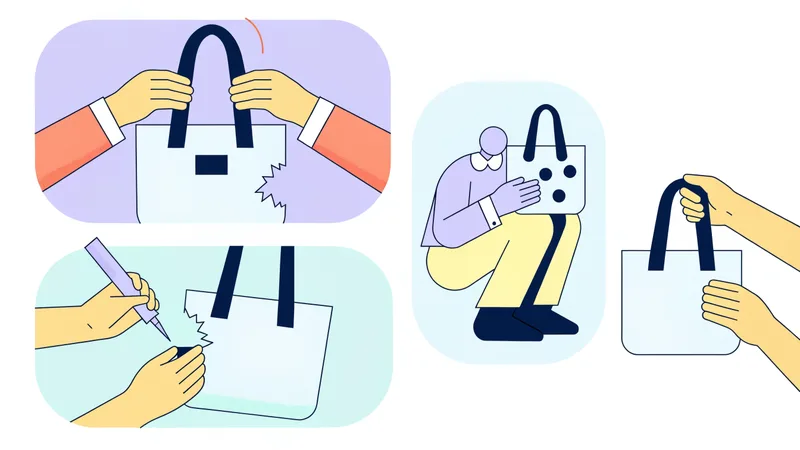
If you already have suitable paper carriers, plan another use around their actual condition. Inspect handles, the base, and any damaged areas before loading them.
Avoid treating the word paper as a full environmental assessment. A label alone cannot tell you how the bag was made or which study matches it.
For end-of-use decisions, ask your local collection service about the particular bag. The FTC explains that a recyclable claim does not guarantee access to recycling in your area. FTC consumer guidance
Choose a size that suits the load instead of requesting unnecessary extra carriers. Decline a bag when you can carry the purchase comfortably without one.
Paper is an option to evaluate within a shopping routine. It is not a reason to abandon another serviceable carrier already waiting at home.
Choose plastic if an existing carrier stays useful

An existing plastic carrier can remain part of your shopping routine where suitable. Inspect it, use it within its instructions, and avoid accumulating replacements without a purpose.
Keep thin film, woven plastic, and other durable constructions separate in your thinking. A result about one design does not identify the performance of every plastic bag.
The UK study, for example, calculated four shopping uses for its LDPE carrier and 11 for non-woven polypropylene. Both compared with HDPE without secondary reuse. Environment Agency, 2011
Do not buy a new carrier just to qualify for a favorable study category. First consider whether a bag you own can perform the same task.
At the end of use, keep ordinary plastic bags and film out of household recycling bins. EPA directs consumers toward appropriate retail collection options instead. Confirm what the collection point accepts. EPA
For checkout availability, use the current plastic bag rules guide. Environmental comparisons do not override local restrictions.
Choose cotton if it will earn repeated use
Consider an existing cotton tote when its size, handles, and care instructions suit your routine. Put it somewhere useful before your next shopping trip.
If you need a new tote, choose around the task rather than an imagined future collection. Ask which current purchase or carrier it would replace.
Look for clear fiber information, dimensions, care instructions, and a stated load limit where supplied. These details help you assess suitability without inventing a lifespan.
Keep environmental labels specific. The FTC advises consumers to identify what a seal evaluates and whether recycled-content claims describe the product or its packaging. FTC
For example, a fabric-content statement answers a material question. It does not establish a verified climate result for that finished tote.
Avoid collecting additional bags to match every errand. Assign an existing carrier a regular job, then judge whether it keeps doing that job well.
The useful question is what you will repeatedly carry. A tote's appearance cannot supply a credible break-even calculation.
When the material debate does not decide the choice
If a suitable bag is already available, you do not need to settle the entire paper vs plastic bags debate before using it again. Start with the immediate task.
Similarly, a purchase you can carry without a bag may not require a material choice at all. Consider the carrier only after deciding whether you need one.
Separate climate questions from other environmental concerns. UNEP's 2020 review explains that alternatives need not outperform single-use plastic across every impact category. Life Cycle Initiative
When comparing claims, write down the question they answer. Is it greenhouse gas emissions, repeated use, recycled content, or a disposal route?
Then consider how the claim changes your behavior. A material comparison is useful if it helps you avoid unnecessary carriers or choose something suitable for repeated work.
If it merely encourages another bag purchase, pause. Reorganizing the carriers you already have may solve the problem. Our guide to buying fewer bags develops that approach.
FAQ
Is paper always greener than plastic?
No. Ask which environmental measure and shopping scenario support the claim. A paper bag's material name does not establish a complete ranking. UNEP's 2020 review found that alternatives have their own environmental footprints and do not necessarily outperform plastic in every category. Life Cycle Initiative
Should I throw away my plastic bags and switch to cotton?
Do not replace a serviceable carrier solely to change materials. First decide what you need to carry and which existing bag can do it. If you need another bag, identify a real job for it. Avoid promising a climate benefit without a relevant comparison of the finished designs.
Does recyclable mean a bag will be recycled?
No. A label does not establish that your own collection service accepts the item. The FTC advises checking local options. EPA specifically directs plastic bags and film away from household recycling bins and toward suitable collection points. Keep collection instructions with the bags awaiting disposal. FTC; EPA
Can I compare two bags using their reuse labels?
Use those labels as a starting point for questions. Ask about the actual design, load instructions, care, and evidence behind environmental claims. A stated durability target does not describe your future behavior. Nor does it automatically match the climate break-even calculation of a published study.
Sources
- assets.publishing.service.gov.uk/media/5a7bff74ed915d01ba1ca7c7/scho0711buan-e-e.pdf
- mst.dk/publikationer/2018/marts/life-cycle-assessment-of-grocery-carrier-bags
- orbit.dtu.dk/files/151577434/2018_Life_Cycle_Assessment_of_grocery_carrier_bags_Environ…
- lifecycleinitiative.org/single-use-plastic-bags-and-their-alternatives-recommendations-…
- nea.gov.sg/docs/default-source/media-files/news-releases-docs/cos-2018-media-factsheet-…
- iso.org/standard/37456.html
- epa.gov/recycle/how-do-i-recycle-common-recyclables
- consumer.ftc.gov/articles/eco-friendly-and-green-marketing-claims