Grow bags for gardening
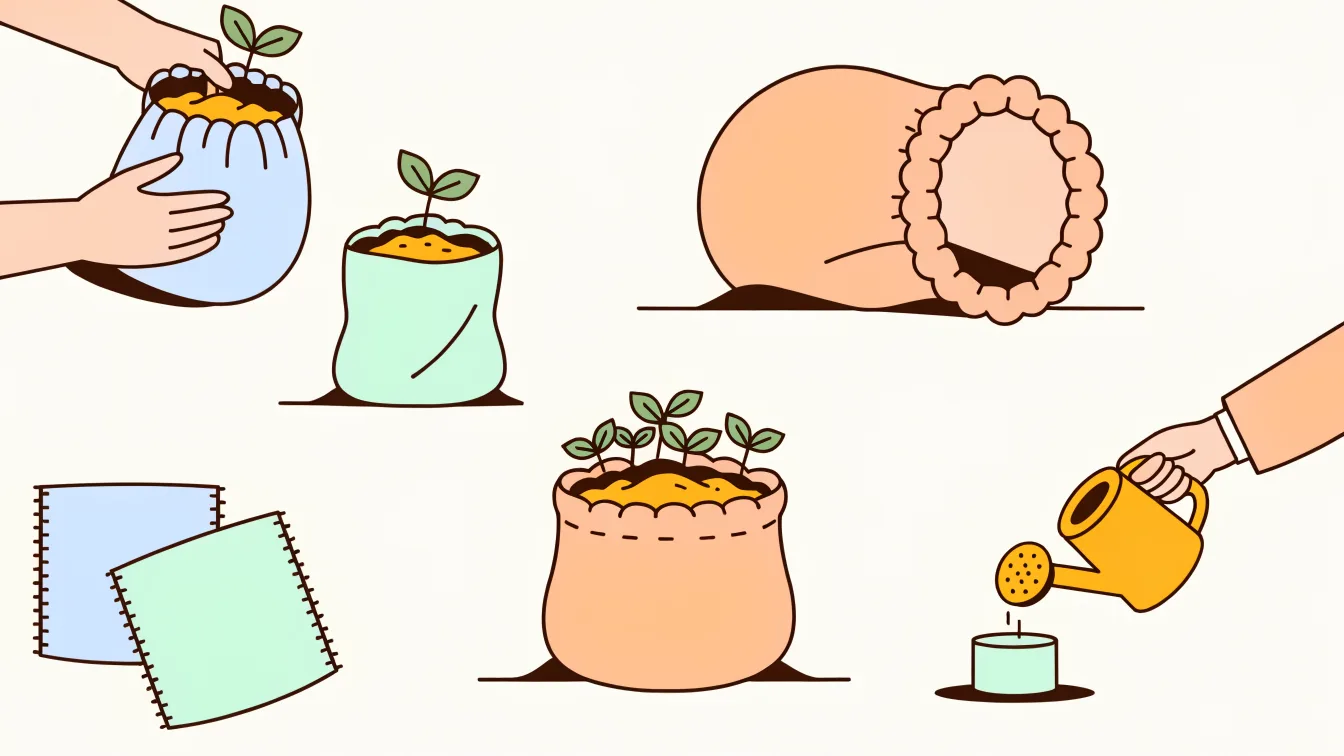
Grow bags are flexible planting containers that hold growing mix while allowing drainage through suitable fabric or purpose-made openings. Choose by the mature plant, usable root space and watering routine, then compare the maker's actual dimensions rather than the size name alone. Oklahoma State Extension explains their container-gardening role.
Which kinds of grow bags suit your setup?
Start with the construction and intended growing environment. A soft-sided planter still needs to suit its location, crop and maintenance routine.
Use the following categories to organize specifications. They describe different choices within the category, rather than a ranking of products.
| Construction or format | Published example or feature | Selection question |
|---|---|---|
| Nonwoven fabric planter | Smart Pot describes nonwoven fibers with drainage through the fabric | Does the maker require additional holes? |
| Recycled PET fabric | Root Pouch lists its Boxer material as recycled PET | Is this specific line intended for aboveground use? |
| PET and natural-fiber blend | Root Pouch lists this blend for its Black line | Does its intended environment match your project? |
| Thin propagation container | Root Pouch identifies Thin Black as a seedling and transplanting format | Are you starting plants or housing mature crops? |
Sources: Smart Pot construction FAQ, Root Pouch materials and propagation specifications.
Ask for a named fiber and an intended use, rather than accepting “fabric” as the complete specification. Compare handles, seams and care instructions separately.
For help reading textile descriptions, see bag materials. Treat a recycled-content statement as a material detail, without assuming it proves a lower environmental impact.
Match container volume to the crop
Use a horticultural guide to set the root-space requirement before choosing the bag. Keep the exact vegetable and variety on your planning list.
The table below gives selected Maryland Extension minimums. Liter figures are rounded conversions from its US-gallon table, rather than manufacturer size labels.
| Crop | Approximate minimum volume | Source volume |
|---|---|---|
| Leaf lettuce | 1.9 liters | ½ US gallon |
| Bush beans | 7.6 liters | 2 US gallons |
| Carrots | 7.6 liters | 2 US gallons |
| Peppers | 19 liters | 5 US gallons |
| Standard tomatoes | 19 liters | 5 US gallons |
| Summer squash | 38 liters | 10 US gallons |
Source: Maryland Extension's minimum container-size table. These are starting minimums, without a promised yield or plant count.
For your planting plan, record the variety, intended spacing and container depth alongside volume. Avoid treating several unrelated seedlings as interchangeable passengers in one container.
Oklahoma State Extension points gardeners toward shallow-rooted crops and suitable dwarf cultivars when space is restricted. Plant-selection guidance.
If a seed packet and a general container chart seem difficult to reconcile, ask your local Extension office about that cultivar. Keep your first planting simple enough to observe and adjust.
Read dimensions separately from the size name
A numbered nursery size deserves its own line on your comparison sheet. Record the published volume separately, rather than automatically translating the number into gallons.
For example, Root Pouch publishes these dimensions and capacities. They illustrate one manufacturer's sizing system, rather than universal dimensions for the category.
| Maker's size | Width × height | Published capacity |
|---|---|---|
| #3 | 10 × 8½ inches | 12 liters |
| #5 | 11 × 10¼ inches | 16 liters |
| #10 | 16 × 12 inches | 39 liters |
Source: Root Pouch's size sheet, which also notes hand-sewn dimensional variation of ¼–½ inch.
Compare the available footprint with the bag's dimensions before ordering soil. Note where a cage, stake or watering line will go on your layout.
Keep soil purchasing separate from the model name, too. Smart Pot describes its soil quantities as estimates affected by settling and filling level. Soil-planning notes.
Write down the mix volume needed for the whole project. Add each planned container individually instead of assuming every similarly named model holds the same amount.
Use how to measure a bag when comparing width, height and volume descriptions.
Give drainage somewhere to go
Follow the specific planter's instructions before cutting the bottom. Smart Pot says its nonwoven containers drain through their fabric and do not require added drainage holes. Maker's drainage FAQ.
That instruction belongs to that construction. For another design, look for its own drainage description, including any required openings or setup steps.
Plan the surface underneath at the same time. Maryland Extension warns that container runoff can mark decks and concrete. Placement considerations.
On your layout, mark the bag, runoff route and watering access. For an upstairs balcony, include the space below in that decision.
Smart Pot advises avoiding prolonged standing water on nonporous surfaces. Its FAQ discusses elevation and saucers for particular situations. Surface guidance.
If you need a tray, select it as part of the setup. Follow the planter's guidance on keeping the container clear of collected runoff.
Avoid adding a gravel layer as an automatic drainage fix. Maryland Extension says rocks at the bottom can worsen waterlogging. Drainage explanation.
Treat drainage as a complete route, from growing mix to the surface beyond the bag. Porous sides alone do not finish the placement plan.
Choose the growing spot before filling
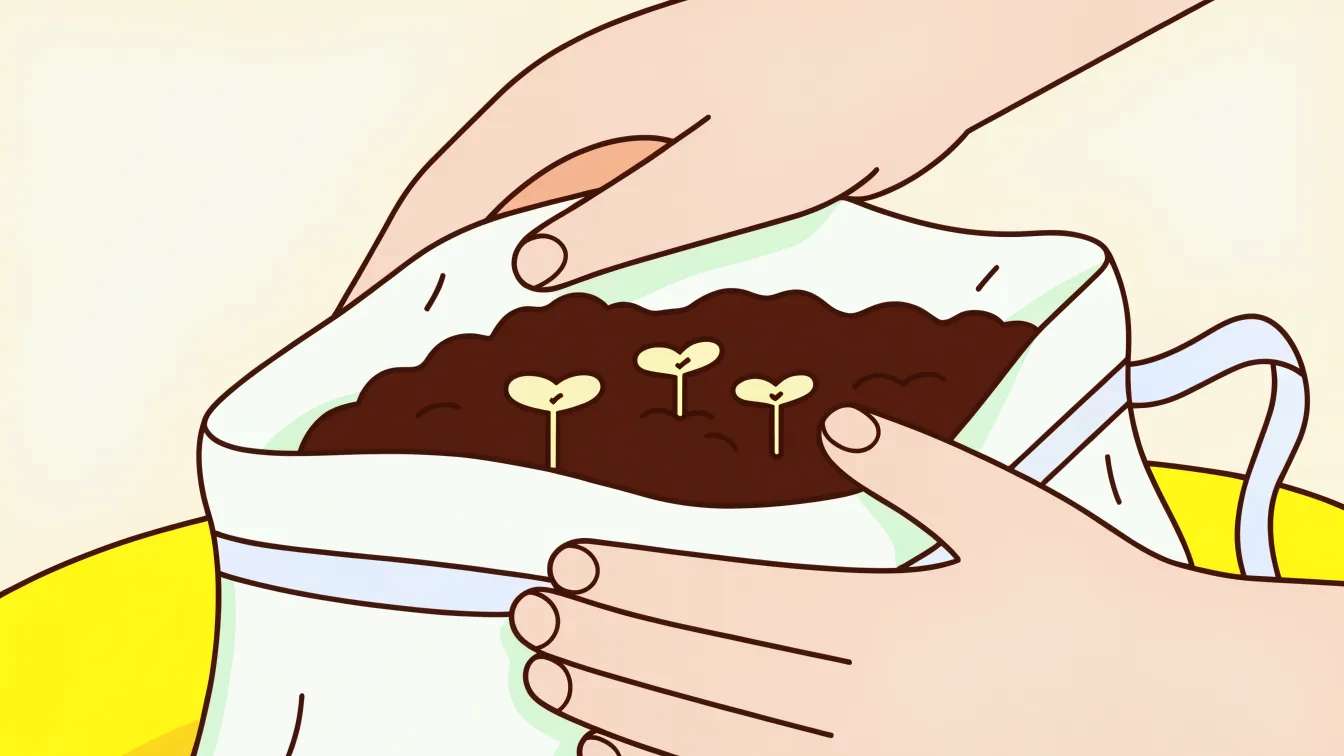
Lay out empty containers first. Include access for watering, harvesting and inspecting the back of each plant, rather than filling every available corner.
Smart Pot specifically advises positioning its containers before filling because filled planters are heavy. Placement instructions.
For a deck or balcony, ask the property manager or a qualified professional about the proposed loaded arrangement. Bring the container layout and intended growing setup.
Do not use a handle's appearance as permission to lift a planted container. Ask the maker about moving that model with its intended contents.
The bag construction guide can help you inspect stitching and handle attachment. A visual inspection does not establish a working load.
Prepare a short placement checklist: water access, drainage route, available sunlight, support position and room to work. Keep it with the planting record.
Choose the crop for the conditions you can actually provide. Oklahoma State Extension highlights the usefulness of suitable compact varieties for limited spaces. Crop-selection discussion.
If the proposed arrangement requires frequent relocation, discuss that requirement before choosing a container. Resolve the movement plan while the bags are still empty.
Use container mix and observe moisture
Read the growing-medium label before filling. Minnesota Extension distinguishes container potting mix from garden soil and topsoil, which can compact in pots. Growing-medium guidance.
Choose a product labeled for your container application. Record whether it already includes fertilizer, then use that information when planning subsequent feeding.
For watering, use observations rather than a fixed calendar interval. Minnesota Extension explains that container material, size and weather affect watering demand. Watering guidance.
Keep a simple notebook with the date, weather, moisture observation and any watering. This gives you a record to discuss if the plant struggles.
During hot periods, make time for additional checks. The same Extension guide notes that some containers need watering more than once daily. Moisture maintenance.
Follow fertilizer label directions rather than copying a rate from another gardener's setup. Minnesota Extension warns that overapplication can damage plants and release excess fertilizer. Feeding guidance.
If your schedule cannot accommodate the observed care needs, reduce the planting plan. Start with a manageable number of containers before expanding.
Clean and inspect between seasons
Keep the original care instructions with the planting record. Decide whether the container will remain planted or be emptied before applying a cleaning routine.
For emptied Smart Pot containers, the maker advises drying and brushing away loose roots and soil. It also says to keep them out of a dryer. Cleaning instructions.
Oklahoma State Extension advises cleaning bags and drying them completely before storage. Seasonal care. Follow your own model's instructions for compatible washing methods.
Inspect the base, side seams and handle attachments before refilling. If anything looks damaged, ask the maker whether the container remains suitable for the intended use.
Keep a note of what grew in each container. If plants developed persistent problems, take that history to your Extension office before deciding how to reuse the setup.
Avoid guessing at disinfectant mixtures or borrowing a treatment from an unrelated fabric product. Ask for advice appropriate to the planter and the identified problem.
For your storage checklist, include the care label, inspection date and next intended crop. Our bag care guide explains how to organize maker-specific instructions.
FAQ
What size container should I use for tomatoes?
Maryland Extension lists about 19 liters, or 5 US gallons, as a minimum for standard tomatoes. Crop-size table.
Use that figure as a starting point, then consider the variety, depth and support arrangement. Compare published capacity with the crop requirement instead of relying on a model number.
Do grow bags need holes in the bottom?
It depends on their construction. Smart Pot says its nonwoven fabric containers do not need additional drainage holes. Drainage FAQ.
Follow the instructions for the exact model you have, including its placement requirements. Before making cuts, ask the manufacturer how that design should drain and whether any preparation is required.
Can I fill a fabric planter with garden soil?
Choose a mix intended for containers. Minnesota Extension explains that ordinary garden soil and topsoil are too heavy for pots and can restrict air and water movement. Soil selection.
Read the package's intended use before filling, and retain its fertilizer information for your feeding plan.
How often should I water a fabric container?
Check its moisture and the plant's needs instead of relying on one universal interval. Minnesota Extension notes that hot, dry conditions can require watering more than once daily. Watering guidance.
Keep observations for your particular container, crop and location, and arrange care before leaving it unattended.
Related guides
Sources
- extension.okstate.edu/articles/2023/grow_bags
- extension.umd.edu/resource/growing-vegetables-containers-and-salad-tables
- rootpouch.com/products
- static1.squarespace.com/static/619bd78959bf9a25b74a811b/t/64ac25aa9b6a78707ab8f41f/1689…
- smartpots.com/products/smart-pot-fabric-planter
- smartpots.com/pages/faq
- extension.umn.edu/about/our-stories/news/starting-your-garden-and-containers-off-right
- extension.umn.edu/garden-and-home/yard-and-garden/gardening-in-minnesota/fertilizing-an…