Matching bags and shoes: the rules and when to break them
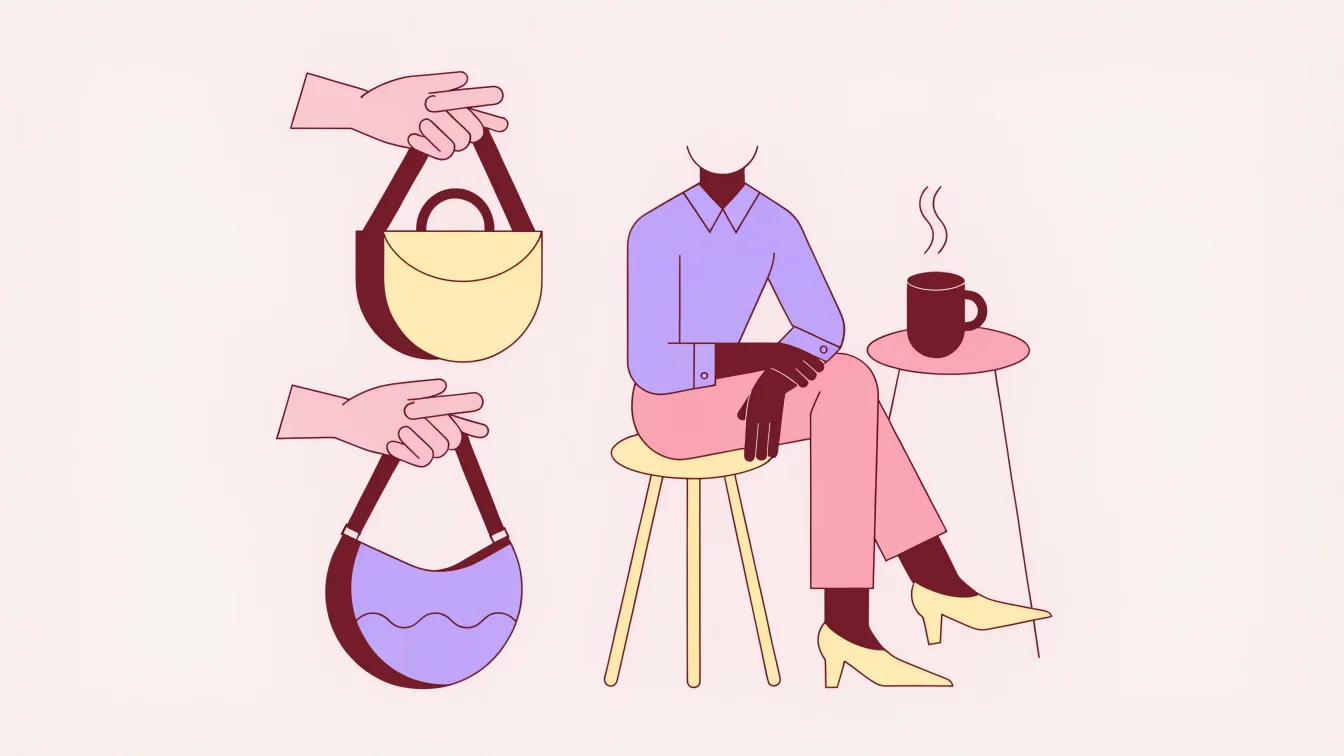
The answer to “should your bag match your shoes” is no: an exact match is one styling choice. You can coordinate through color, texture or detailing instead. Begin with useful shoes and a useful bag, then decide how they connect.
Should your bag match your shoes for every occasion?
Treat an exact match as an option, not a test your outfit must pass. Start by choosing the relationship you want between the accessories.
A repeated color gives you a clear connection. Related shades offer another approach. Contrasting accessories can each connect to a different part of your clothes.
Use this table to compare approaches with pieces you already own. These are styling suggestions, not dress requirements.
| Approach | What to repeat | Pairing to try | What to keep independent |
|---|---|---|---|
| Exact match | Color and finish | Black patent shoes with a black patent bag | The rest of the outfit |
| Tonal pairing | Related shades | Chocolate shoes with a tan bag | Exact depth of color |
| Detail connection | A small visible feature | A metal-colored shoe buckle and similar bag hardware | Main accessory colors |
| Texture connection | Surface appearance | A woven bag and woven shoe detail | Shape and shade |
| Outfit connection | A clothing color | Navy shoes with navy trousers; a red bag with red in a scarf | A direct shoe-to-bag match |
| Deliberate contrast | A planned difference | Dark shoes with a pale bag and simple clothing | Identical finishes |
Choose one approach before adding more accessories. For a wider view of shapes and carrying options, begin with the handbags guide.
Where the matching convention comes from
The preference for matched accessories has a documented historical context. The Met describes matching handbags and shoes as expected in mid-20th-century fashionable dress.
Its American accessory set from 1965–75 combines coordinating pieces with gold-colored metal details. That is evidence of an established convention during that period.
Use the example as a reference for a complete matched look. It does not require you to reproduce the period's wardrobe.
If you enjoy that approach, begin with the bag and shoes as a pair. Keep other accessories simple while you decide whether to repeat another detail.
If you prefer a looser connection, retain only one feature. A metal tone or a color family can be enough for your own styling plan.
Avoid treating matching as inherently dated or mismatching as inherently modern. Those judgments depend on the look you want, rather than a universal timetable.
For a vintage-inspired outfit, a matched pair may be part of the appeal. For an everyday outfit, choose whichever relationship works with your existing clothes.
Coordinate colors without searching for identical shades
Put the accessories beside the clothes, not just beside each other. Use the complete combination to decide which color belongs where.
With black shoes, try a bag that repeats something in the outfit. For example, connect an olive bag to an olive jacket.
With brown shoes, compare a brown bag against a contrasting one. You might prefer a close connection for one outfit and a different color for another.
For navy shoes and a black bag, add both to the actual clothes before deciding. There is no need to resolve the pairing in isolation.
A print offers another starting point. Select one color in it for the bag, leaving the shoes connected to the background shade.
Adobe's color tool includes monochromatic, analogous and complementary palette options. Use them to explore relationships rather than certify an outfit.
Keep the chosen color connection visible somewhere in the complete look. If you dislike the result, change one accessory at a time.
The guide to versatile bag colors helps with choosing a regular everyday shade.
Use formality and texture for formal settings

For a ceremony, dinner or other dressed occasion, begin with the actual invitation. Settle the clothing and footwear before making the bag choice.
Try a compact bag with the outfit if it holds your essentials. Its color can connect to the shoes, jewelry or clothing.
For a quieter combination, use one repeated finish and keep other details restrained. For contrast, let the bag supply the accent.
A silver-colored bag does not require silver-colored shoes. Try it beside the jewelry first, then decide whether another metallic element belongs in the look.
You can also mix matte and shiny finishes. Compare the combination you intend to wear rather than assuming every surface needs identical treatment.
Separate visual coordination from material care. Coach gives water precautions for its suede; follow the instructions for your own bag's finish.
For black tie, cocktail and daytime events, use the formal dress-code bag guide. Its packing and carry checks help settle the choice beyond color.
Do not sacrifice necessary belongings to preserve an exact accessory match.
Build the pairing in a useful order
Start with the item whose function is least flexible. That might be footwear for your route or a bag that carries your work equipment.
- Choose shoes you intend to wear for the setting and journey.
- Pack the bag with the belongings the day requires.
- Put on the clothes and outerwear.
- Select one connection from the decision table.
- Compare that version with one deliberate contrast.
- Keep the version you prefer while walking, sitting and carrying the packed bag.
For a workday, make the comparison with the computer and lunch included. Do not base the choice on an empty bag alone.
For an evening, include the coat or wrap. Decide how you want the accessories to look during arrival as well as indoors.
For a trip with changing activities, prioritize the combination that serves the longest part of your day. Add a second bag only for a distinct need.
Use matching a bag to an outfit when the accessories work together but the full look still feels unresolved.
Common mistakes when pairing bags and shoes
Avoid buying a new pair solely because two shades are close but not identical. First decide whether you actually want an exact match.
A related shade can be a deliberate choice. Keep it because you enjoy the combination, rather than trying to make it impersonate an identical color.
Avoid repeating every detail automatically. Try matching the color while allowing the hardware or texture to differ.
Avoid assuming that mixed metals require another purchase. Compare the complete outfit before deciding a clasp and buckle need to agree.
Avoid treating a successful pairing as the only pairing available. Try the same bag with different shoes you already use.
Finally, avoid moving essentials into someone else's bag just to preserve your accessory plan. Choose a carrying arrangement that works for you.
If the smallest matching bag cannot hold the evening's belongings, try another shape or a different color. The outfit can adapt to a practical bag choice.
Keep the result as a useful option, not a rule you must repeat every morning.
FAQ
Should your bag match your shoes at a wedding?
It can, but an exact match is a styling choice. Start with the invitation and the outfit you intend to wear. Coordinate through a color, finish or small detail if you prefer. Make sure the bag holds your own essentials and works with the way you will carry it.
Can I wear brown shoes with a black bag?
Yes, if you enjoy the complete combination. Try the accessories with your actual clothes rather than judging the pair alone. You can repeat black or brown elsewhere, or keep the contrast. Choose the bag for its function first, then decide how much visual connection you want.
Do gold and silver bag details need to match my shoes?
They do not need to match for every outfit. You can repeat one metal tone, mix them or connect the bag to another accessory. Compare the whole look before changing anything. Treat matching hardware as an optional organizing idea rather than a requirement to replace an otherwise useful bag.
Can a patterned bag work with patterned shoes?
Try them together with the clothing you intend to wear. Begin with a repeated color if you want a connection, then compare a simpler accessory version. Keep the combination you prefer. You do not need a universal pattern-mixing formula, and either accessory can be the starting point.