Train luggage rules: Amtrak, Eurostar and beyond
Rules change. Confirm with the operator before you travel.

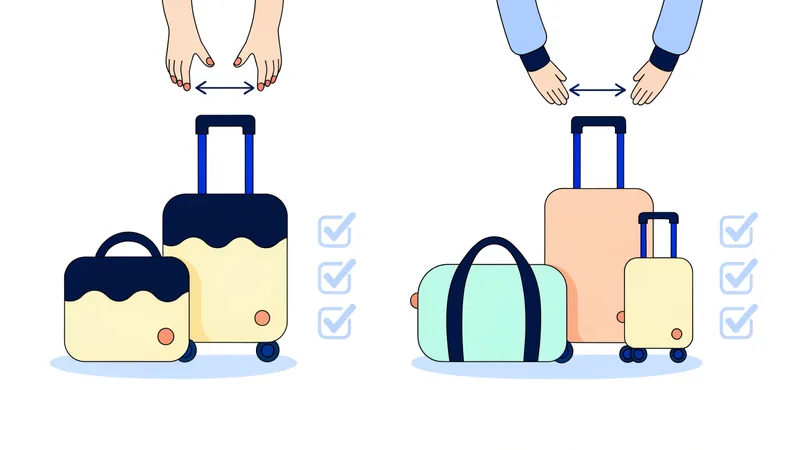
The Amtrak baggage policy permits one personal item and two carry-on bags within its published size and weight limits. Amtrak lists the current allowance. Other operators use different systems, so measure your luggage and plan each train separately, including station transfers.
Amtrak baggage policy and Eurostar: the main differences
These published allowances were checked in November 2026. Sizes describe different measurement systems; a maximum length is not the same as total linear dimensions.
| Operator and category | Included quantity | Published limits | Important condition |
|---|---|---|---|
| Amtrak personal item | One | 25 pounds (12 kilograms); 14 x 11 x 7 inches | Fits under the seat; Amtrak |
| Amtrak larger carry-on | Two | 50 pounds (23 kilograms); 28 x 22 x 14 inches each | Pacific Surfliner depth is 11 inches; Amtrak |
| Amtrak checked baggage | Two included where service exists | 50 pounds; 75 total linear inches each | Confirm train and station availability; Amtrak |
| Eurostar Standard or Plus | Two larger bags and one hand bag | Approximately 33.5 inches (85 centimeters) maximum length on London routes; 29.5 inches (75 centimeters) elsewhere | You must move your bags safely; Eurostar |
| Eurostar Premier | Three larger bags and one hand bag | The same route-specific length limits | No published weight limit; self-handling still applies; Eurostar |
Use the travel bags hub to organize the rest of your packing choices. Keep every operating service beside its own allowance in your itinerary notes.
Choose bags you can move through the whole journey
Start with a route sketch: transport to the station, departure platform, onboard storage, connection, and final transport. Mark each point where you will handle the bags yourself.
Amtrak says passengers must be able to lift their carry-on items safely onto the luggage shelf. Its carry-on guidance also requires bags to fit the station sizer.
That makes a manageable packing arrangement more useful than simply filling the maximum number of permitted pieces.
Lay your proposed bags beside one another. Decide which holds documents and essential supplies, which contains the main clothing, and which can remain closed throughout the ride.
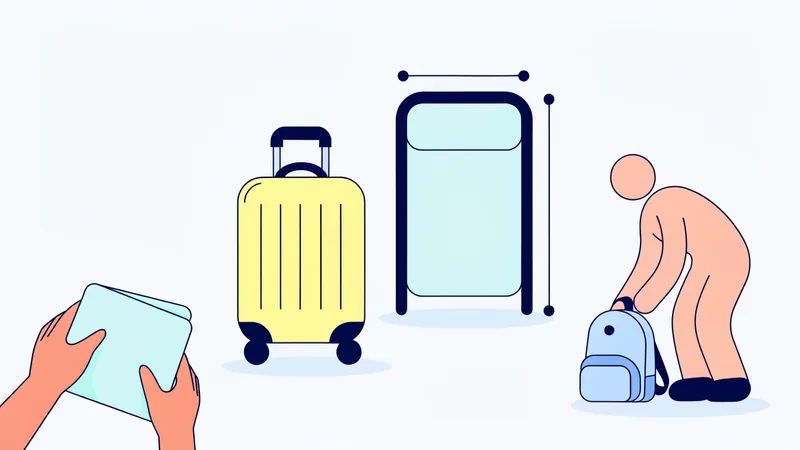
Measure the fully packed bags using the bag-measuring guide. Record the measurements without rounding down to match a limit.
For Eurostar, note the route's maximum length separately from any width and depth you recorded for other transport. Its policy also requires safe movement and storage of your luggage.
Do a practical rehearsal with the completed setup. If you cannot manage all the pieces together, reduce the contents or arrange suitable assistance before travel.
Check whether checked baggage actually solves your problem
Checked service is a distinct arrangement, not simply another name for a suitcase placed in an onboard rack.
Amtrak tells passengers to confirm that the train and both origin and destination stations accept checked baggage. Its checked-baggage page explains the service and limits.
If checking is available, separate the contents you need aboard before handing over the larger bag. Keep your booking, identification, medication, and other journey essentials in the accessible group.
| Bag group | Suggested contents | What to arrange |
|---|---|---|
| Accessible personal bag | Documents and journey essentials | Retrieve without opening the main case |
| Larger onboard bag | Clothing and ordinary belongings | Fit the applicable onboard allowance |
| Checked case | Items not needed during the ride | Confirm station service and checking deadline |
| Connection kit | Reservation details and transfer notes | Keep available between trains |
Amtrak says checking times vary by station, so use the specific station information. It also calls for at least a two-hour scheduled layover when transferring between stations. Read the checking instructions.
Keep the baggage receipt with your travel documents and establish where to collect the case before leaving the counter.
Exceptions: route variations, children, and special equipment

An allowance for ordinary luggage does not settle the treatment of every item. List any stroller, cycle, instrument, or unusually shaped equipment separately before choosing bags.
Amtrak permits an additional infant item when traveling with an infant under two. Its carry-on page describes that exception alongside the ordinary allowance.
Eurostar publishes separate arrangements for children's bags, folded pushchairs, and special equipment. Its luggage page also distinguishes routes when explaining extra-item services.
Keep the actual item and route together in your planning notes. Do not transfer an exception from one service to a different operator or country.
For journeys continuing onto another train, open that operator's current policy before relying on the dimensions used for the first leg.
If part of your trip involves a replacement bus or connecting coach, resolve the luggage arrangements for that service too. Use the bus luggage guide as a separate planning step.
For a larger item that remains difficult to manage, compare an approved carriage arrangement with the storage and shipping guide before departure.
What happens if you get it wrong
An oversized or overweight bag can require a change at the station. Amtrak says overweight bags must be repacked to below 50 pounds. Its carry-on policy also addresses excess pieces.
Do not assume a larger bag can simply be checked instead. That alternative only helps when the relevant train and stations provide the service.
Packaging matters as well. Amtrak requires suitable containers and excludes packages that cannot securely hold their contents or withstand necessary handling. Read its packing guidance.
Inspect closures before travel and avoid leaving loose belongings attached to the exterior. Keep anything you might need to remove accessible.
Once aboard, use designated storage rather than an empty seat or passageway. Amtrak specifically prohibits placing luggage where it creates an obstruction or safety hazard. Its onboard storage instructions explain the permitted areas.
If staff identify a problem, establish whether it concerns weight, dimensions, quantity, packaging, or placement. Resolve that particular issue rather than assuming the entire luggage arrangement needs changing.
Before you go: a station and storage checklist
Review the operator pages again before departure. Rules change, and a return journey may involve another class, route, or service.
Write down the allowance in the same units used by the operator. Where this guide supplies approximate conversions, keep the original measurements alongside them.
- Identify every train and any connecting road service.
- Measure and weigh the completed bags.
- Confirm checked service where you plan to use it.
- Review station-specific checking times and transfer arrangements.
- Keep documents and essential supplies in the accessible bag.
The sequence is a preparation method, rather than an additional operator rule. The linked policies determine the actual conditions of carriage.
Make the final test practical: can you move the whole setup, retrieve your ticket, and place bags in the approved storage arrangement?
If one piece makes that sequence difficult, revise the packing before reaching the station. Use the luggage weight guide to record changes after repacking.
Finally, label each bag and retain your packing record for the return journey. Make that record available even when the larger bags are checked or stored elsewhere.

FAQ
Does Amtrak allow two personal items?
The current Amtrak baggage policy lists one personal item and two larger carry-on items, with separate limits for each category. Read the current allowance. Do not rely on an older summary when packing. Confirm the rules for your actual service and keep the personal bag within its smaller dimensions.
Can I check luggage at every Amtrak station?
No. Amtrak says checked baggage is available only on equipped trains and at participating locations. Its checked-baggage guidance tells passengers to verify the origin, destination, and train. Confirm that arrangement before packing a case that you cannot carry aboard within the ordinary allowance.
Does Eurostar have a baggage weight limit?
Eurostar says there is no luggage weight limit, but you must be able to move your bags safely and store them appropriately. Read its policy. Quantity and route-specific length limits still apply. Judge your packing arrangement by those conditions and your ability to manage the complete setup.
Can I leave a suitcase in the train aisle?
Use the operator's designated luggage areas. Amtrak specifically says bags must not occupy aisles, vestibules, empty seats, or other locations creating a hazard. Read its storage instructions. Plan the bag arrangement before boarding so you can store the larger pieces while keeping essential documents accessible.