Quilted bags

A quilted bag uses stitched, layered construction or a surface described through that technique; the V&A defines quilting as stitching layers together. Choose by the complete construction, not the pattern alone. A padded appearance does not establish equipment protection, weather resistance or washability.
What does quilted bag construction tell you?
Start with the layers rather than the pattern name. The V&A describes quilting as stitching layers of material together, often including padding between outer layers. Technique explanation.
For a specific bag, look for separate entries describing the shell, filling and lining. One rounded example identifies polyester for each of those components. Published material breakdown.
Use those entries to understand what the product contains. Avoid inferring the filling's thickness or a protection rating from photographs alone.
| Component | Information to seek | Choosing question |
|---|---|---|
| Shell | Exact material and finish | Does its care suit your routine? |
| Filling | Published material and placement | Where is padding actually present? |
| Lining | Material and compartment layout | Can your belongings use the space easily? |
| Stitching | Pattern and panel arrangement | Is quilting present where you expect it? |
| Base and corners | Construction and support | Does the complete body suit your packing? |
Keep the surface treatment separate from the bag's silhouette. A shoulder bag, tote or compact flap bag still needs its own size and access assessment.
Use the parent handbags guide to compare those shapes before choosing the stitched finish you prefer.
Compare diamond, chevron and puffer-style finishes
Think of these as visual descriptions. A geometric name does not supply a universal specification for materials, padding or construction quality.
| Description | What to look for | Published example | What to establish separately |
|---|---|---|---|
| Diamond | Intersecting diagonal lines creating diamond-shaped areas | A compact diamond-quilt design | Shell composition and closure |
| Chevron | Repeated angled lines forming a V-shaped arrangement | A lightly padded nylon shoulder design | Actual padding and available space |
| Puffer-style | A visibly raised, puffy treatment | A nylon tote described as puffy and quilted | Filling details and packed profile |
Compare the scale of the pattern as well as its name. Choose the visual balance you like without treating larger or smaller stitched areas as a performance ranking.
If a listing uses terms such as quilted look, inspect its construction description. Ask whether you are choosing actual layered stitching, an embossed effect or another decorative treatment.
Quilting and patchwork also describe different techniques. The V&A distinguishes stitched layers from sewing small pieces together to form a design. Technique comparison.
A patterned print is another separate choice. Decide whether you want the stitched geometry, the color design or both before comparing products.
Read materials independently of the pattern
The same general surface effect appears on different constructions. Compare the published material entry rather than assuming that a traditional-looking pattern means leather.
For example, one compact diamond design lists Nappa PU, while the chevron example lists nylon. First specification; second specification.
Use a component worksheet when the bag includes contrasting trim, chain handles or mixed materials:
| Part | Record | Question before choosing |
|---|---|---|
| Main body | Exact shell description | Does the material match what you expected? |
| Padding | Filling specification, when published | Are you relying on an explicit feature or appearance? |
| Trim and handle | Separate composition and attachment | Which instructions apply to these parts? |
| Interior | Lining and pocket materials | Does the care label cover the whole assembly? |
For a cotton version, obtain the exact model's cleaning instructions. Vera Bradley explains that construction and hardware make some cotton designs unsuitable for machine washing. Maker's care explanation.
That is a useful reminder to compare the complete product. A fiber name describes part of the bag; it does not settle how every attached component should be treated.
Compare size with the usable packing space
Record dimensions in a consistent order, and preserve any qualification such as width measured at the top. Do not treat exterior measurements as an interior capacity statement.
| Published example | Width x height x depth | Measurement qualification |
|---|---|---|
| Compact diamond design | About 8.27 x 4.53 x 2.36 inches | Converted from 21 x 11.5 x 6 centimeters; source |
| Nylon chevron shoulder design | 11.8 x 8.3 x 3.5 inches | Published body dimensions; source |
| Rounded quilted shoulder design | 14.6 x 8.3 x 5.1 inches | Width measured across the top; source |
These examples illustrate individual products, not standardized sizes for the category. Compare them with the actual objects you carry.
Start with a phone in its normal case, filled wallet and any rigid glasses case. Establish the usable compartment and opening before assuming they fit together.
For a hypothetical 3-inch-deep case, a bag measuring 2.36 inches deep outside does not provide a straight depth-aligned fit. Other orientations need a separate fitting exercise.
Use the handbag size guide to organize the comparison. Avoid calculating liters from exterior dimensions when the maker has not supplied a usable-capacity figure.
Choose the closure and carrying arrangement separately

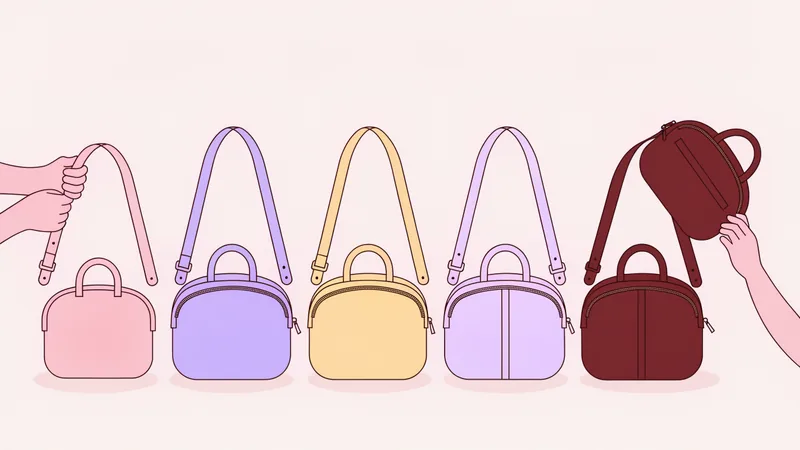
Quilting does not determine how the bag opens or hangs. Inspect the fastening and strap arrangement after deciding which body shape meets your needs.
One diamond design uses a push-lock closure. A nylon chevron version instead lists a zipper and adjustable strap. Closure example; zippered example.
Use the following fitting sequence to assess the complete arrangement:
- Put your normal belongings into the usable compartment.
- Close the bag without pushing the contents against the fastening.
- Wear it over your usual clothing.
- Open it and retrieve the object you use most often.
- Return that object and fasten the bag again.
Record whether you prefer removing the bag before opening it. Consider the space needed by a flap or the position of the zipper pull.
For a tote, rehearse carrying both handles together. For a longer strap, compare its adjustment range with your preferred resting position.
Treat comfort as a personal fitting decision. A soft-looking surface does not settle how you will like the packed bag's size or carrying arrangement.
See bag straps explained for the distinction between strap length, drop and construction.
Separate padding, weather claims and equipment protection
Read each performance claim independently. Do not convert a puffy finish into a promise of drop protection for a camera, computer or other device.
If equipment protection matters, start with the device maker's carrying guidance and the bag's specific protective features. Determine whether a designated compartment or separate case is required.
Weather language needs the same care. One rounded quilted model lists a water-repellent finish and explicitly says the finish is not permanent. Maker's limitation.
That statement concerns the identified product. It does not establish waterproofing for all stitched bags or all of their openings.
| Label or appearance | What it establishes | What to establish separately |
|---|---|---|
| Quilted | A construction or surface description | The exact layers and materials |
| Padded | Padding is described somewhere in the product | Placement and intended protective purpose |
| Water-repellent | A stated finish on the named product | Its limits and maintenance instructions |
| Device compartment | A designated space, if listed | Actual dimensions and protection details |
Use waterproof versus water-resistant guidance to interpret weather labels. Choose around the published claim you need rather than the appearance of the stitching.
Follow the care label for the complete bag
Begin with the label supplied for the exact model. One polyester example expressly prohibits washing and dry cleaning. Product care instructions.
For cotton designs approved for laundering, Vera Bradley describes cold gentle washing followed by air drying. It also warns that some models require spot cleaning instead. Maker's instructions and exceptions.
For its faux-leather products, Charles & Keith recommends gentle wiping and advises against abrasive scrubbing. Apply those instructions only to products they cover. Material-care guidance.
Before cleaning, empty the pockets and identify the trim, hardware and any removable parts. Follow the maker's preparation instructions rather than selecting a method from the pattern alone.
For storage, use the support and positioning specified by the maker. Refer loose stitching, damaged seams or changes in closure operation for appropriate repair advice.
For styling, choose the pattern and finish you like with your clothing. Diamond stitching does not require formal wear, and a puffy finish does not impose a casual dress code.
A quilted bag should meet the same practical needs as any other handbag: usable space, workable access and care you can maintain. Let the stitched texture complete that choice.
FAQ
Can all stitched fabric bags go in the washing machine?
Follow the exact care label. A maker notes that some cotton designs require spot cleaning because of their construction and hardware. Another quilted polyester model prohibits washing altogether. The stitching pattern and shell fiber alone do not establish a cleaning method for the complete bag. Cotton-care exceptions; polyester instructions.
Are diamond patterns stronger than chevron patterns?
Do not infer a strength ranking from decorative geometry. Compare the actual materials, assembly and any relevant published test information. Pattern names help describe appearance, but a purchasing decision also needs the exact product's construction. Choose the look you prefer after establishing that the bag suits your contents and carrying routine.
Does a puffy handbag protect a laptop?
Do not assume equipment protection from a padded appearance. Establish the computer's actual dimensions, the bag's usable compartment and any specifically described protective features. Follow the device maker's carrying guidance. If you plan to use a separate sleeve, include its full dimensions in the fitting exercise before packing other belongings.
Is quilting the same as patchwork?
They describe different techniques. Quilting joins layers through stitching, while patchwork joins smaller pieces to create a design. The techniques can appear together in one object. When comparing a bag, read the shell, filling and lining specifications separately from any patchwork pattern or printed decoration. V&A technique explanation.
Related guides
- Bag padding explained: understanding where padding sits and what product descriptions tell you.
Sources
- vam.ac.uk/articles/an-introduction-to-quilting-and-patchwork
- charleskeith.com/catalog/CK2-20671747_BLACK.html
- charleskeith.com/us/CK2-20782535-1_CREAM.html
- charleskeith.com/sg/CK2-30782510-1_GREY.html
- uniqlo.com/us/en/products/E472785-000/00
- verabradley.com/blogs/the-vb-blog/how-to-clean-your-handbag-a-step-by-step-tutorial
- charleskeith.com/us/product-care-details.html