Storage bags for clothes and bedding
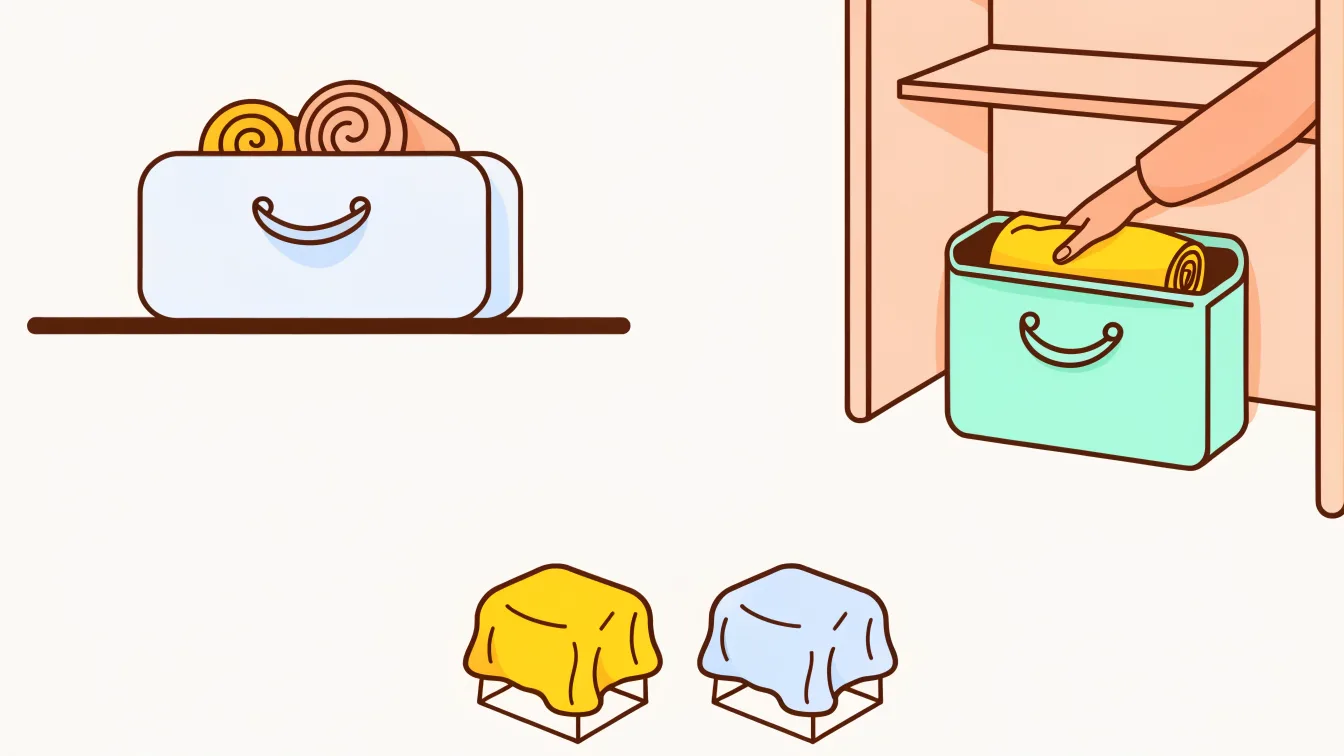
Choose storage bags for clothes and bedding by matching the packed contents to the available space, access and care needs. Measure before selecting a case. Plan for clean, dry textiles, and treat ordinary household organization separately from preserving fragile or historic pieces.
Match storage bags for clothes to the storage location
Start with the shelf, closet or under-bed space you actually intend to use. Write down its dimensions before deciding how much clothing to assign to it.
For daily access, plan around the pieces you reach for most often. For seasonal storage, consider where the packed case will wait between rotations.
| Format | Planning use | Measurement to prioritize | Supporting source |
|---|---|---|---|
| Low zippered case | Folded clothing beneath a bed | Filled height and access route | Low-profile case specifications |
| Wider fabric case | A grouped set of household linens | Width, depth and opening clearance | Wider case specifications |
| Upright clear bag | A separately labeled seasonal group | Full standing dimensions | Clear bag specifications |
| Loose cotton cover | Suitable garments stored hanging | Garment support and surrounding space | Conservation hanging-storage guidance |
Use this table to organize a shortlist, not to assign every textile the same treatment. Keep the storage location and the contents together on your notes.
For instance, write “guest linens, bedroom shelf” rather than simply “large bag.” That gives you something concrete to measure and a clear purpose for the space.
Measure the filled case and its exit route
Published dimensions provide a starting point. Measure your own space at its narrowest usable point, including the route the packed case must travel.
| Published case example | Listed dimensions | Planning question | Source |
|---|---|---|---|
| Short low-profile case | 17 × 20¾ × 7½ inches | Can this group sit within one clear bay? | Maker's measurements |
| Medium low-profile case | 25½ × 20¾ × 7½ inches | Can it pass the bed supports? | Maker's measurements |
| Long low-profile case | 35½ × 20¾ × 7½ inches | Is there room to pull it fully outward? | Maker's measurements |
| Upright clear bag | 25½ × 8¾ × 25½ inches | Can it stand in the intended location? | Maker's measurements |
For under-bed use, include center rails, legs and anything stored nearby in your measuring sketch. Mark which side you will use for retrieval.
Next, fold the intended contents and measure the proposed bundle. Leave the final decision until you have compared that bundle with the bag's usable opening.
Avoid solving a poor fit by planning to force the zipper closed. Instead, divide the group or choose a different location. Record your chosen arrangement so you can repeat it after laundering.
Test access with an empty case in the proposed location. Open it in place, then try removing it entirely. Include any belongings you must shift in your storage plan.
For a shared shelf, mark each proposed group's position on paper. Keep frequently retrieved pieces in the section you can reach directly, and assign seasonal groups elsewhere.
Compare fabric and plastic by their actual construction
Look beyond the words fabric and plastic. Read the fiber or polymer specification, closure details, inserts, ventilation features and care instructions as separate attributes.
The long fabric case above specifies polyester fabric, a polypropylene insert and corner ventilation nets. The clear upright bag specifies polypropylene construction and damp-cloth cleaning. These examples illustrate different designs, not a universal material ranking.
Compare the two examples feature by feature:
| Feature | Vented fabric case | Clear upright bag |
|---|---|---|
| Construction | Polyester fabric with a polypropylene insert | Polypropylene |
| Access and visibility | Zippered case with corner ventilation nets | Transparent sides and a zipper |
| Cleaning | Vacuum or lint roller; do not wash | Damp cloth; do not wash |
These details come from the fabric-case specifications and clear-bag specifications. Ventilation, visibility and moisture protection are separate attributes; do not treat a zipper or clear panel as proof of a watertight enclosure.
Keep visibility and light protection as separate decisions. For valued textiles, the Canadian Conservation Institute warns that light damage is cumulative and irreversible. Choose the storage location with that guidance in mind.
Do not substitute a dry-cleaning cover for a considered preservation plan. The same institute advises against those plastic garment covers for textile storage.
If your aim is squeezing bulky items into less space, compare the separate vacuum-storage guide. Decide whether compression suits the specific item before making it part of the plan.
Pack ordinary clothing and bedding in retrievable groups
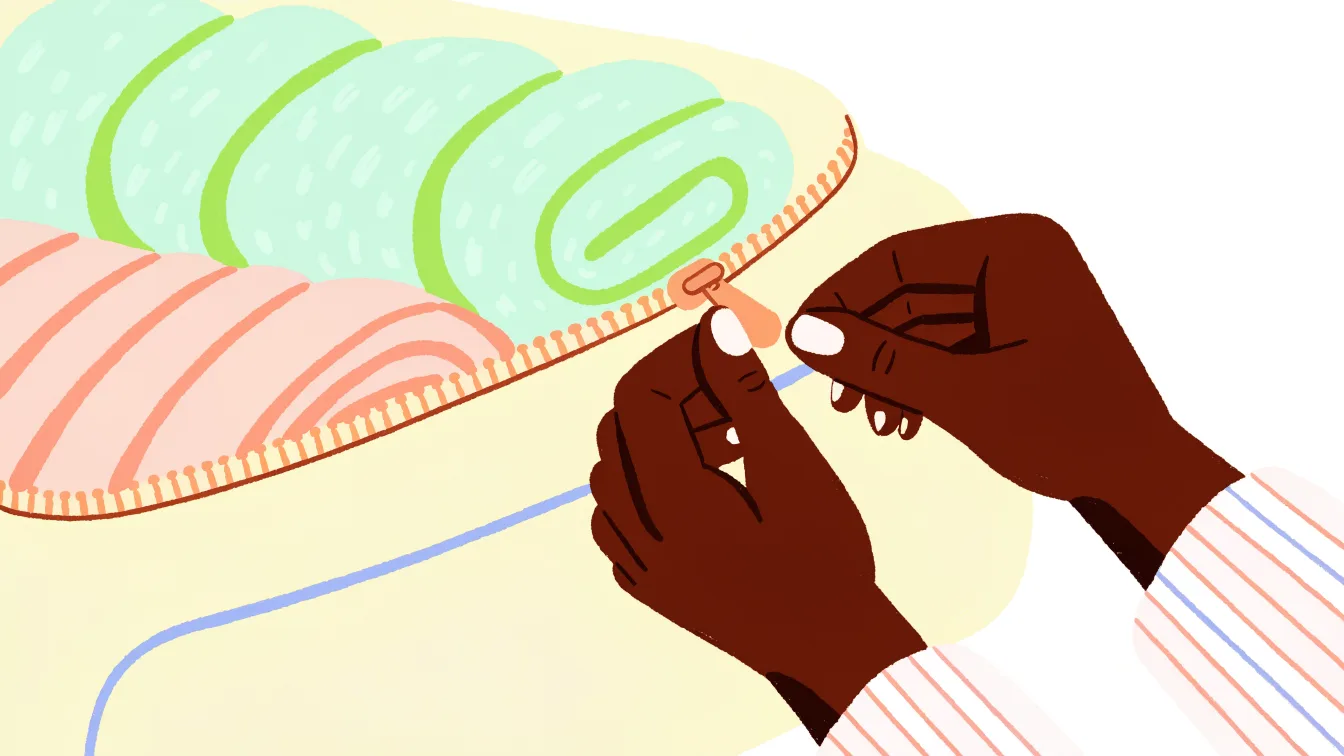
Begin with a modest group you can name precisely: guest sheets, summer shirts or spare pillowcases. Avoid choosing an oversized category before measuring its contents.
Prepare each textile using its own care instructions. For stored garments, the Canadian Conservation Institute emphasizes cleanliness because soil can invite infestation. Keep washing and storage as separate stages of the job.
Lay out the chosen group before packing. Place the pieces you expect to remove first nearest the opening.
Label the contents with names another household member will understand, adding the room or owner when useful. For example, distinguish a complete guest-bed change from a collection of spare pillowcases. Update the label when the contents change.
For bedding, use the actual folded bundle rather than a bed-size label to make the fit decision. If the group does not fit comfortably, split it and keep matching labels.
Keep clothing awaiting washing in laundry bags until it has completed its care routine. For a household move, plan transport separately with the moving-bag guide.
Give fragile and heirloom textiles a separate plan
A family quilt, beaded dress or historic garment deserves an individual storage decision. Start with its condition and support needs rather than trying to match your everyday organization system.
The Canadian Conservation Institute recommends flat storage with full support for most textiles. Its detailed flat-storage guidance calls for a sufficiently large container, minimal folding and suitable lining materials.
Those linings can include prewashed cotton sheeting or unbuffered acid-free tissue. Use the preservation guidance for that task rather than assuming any soft household bag offers equivalent protection.
For hanging, consider the textile's structure before selecting a cover. The institute advises against hanging fragile, heavily decorated, knitted or bias-cut garments. A cover does not resolve the support problem described in that guidance.
Make a separate list of valued pieces before clearing a closet. Note which need conservation advice and leave them out of the general packing batch until you have a plan.
For ordinary hanging clothing, consult the garment-bag guide. For an important or fragile textile, ask a qualified conservator about the item, its condition and the intended storage environment before proceeding.
Control moisture and clean the storage container
Treat the room and the bag as separate parts of storage care. Begin with the location: look for leaks, condensation or another moisture source before putting textiles away.
The EPA advises against enclosing wet or mold-affected materials. Its general household guidance recommends prompt drying after wetting and correcting the moisture source. A new container is not a substitute for resolving that problem.
Next, follow the bag's own cleaning directions. The medium fabric case specifies vacuuming or a lint roller and prohibits washing. Choose a cleaning routine that the finished construction permits.
Schedule a look at the contents when you next rotate clothing or change bedding. Inspect the bag, its surroundings and the textiles rather than simply reading the label and closing the closet.
For valued items, the conservation guidance recommends regular inspection for insect activity. If you find a problem, seek appropriate advice before returning the affected item to the group.
FAQ
Are storage bags for clothes better in fabric or plastic?
Choose by the complete design and intended contents. Compare material specifications, ventilation, closure and cleaning instructions rather than treating either category as universally preferable. For valuable textiles, use the Canadian Conservation Institute's storage guidance to decide on support, suitable materials and the surrounding environment.
What size case fits under a bed?
Measure your bed's clear space and the extraction route. Published low-profile examples are 7½ inches high, but that is a product dimension rather than a universal clearance recommendation. Compare the filled case with rails, legs and the space available to pull it outward before settling on a size.
Can I put a comforter in a zippered bag?
First follow the comforter's care and storage instructions, then compare the folded item with the bag's usable opening and dimensions. One published bedding-storage case measures 35½ × 20¾ × 7½ inches. Treat that as a measurement reference rather than a guarantee that any particular comforter will fit.
Can these bags go in the washing machine?
Read the exact model's instructions.
Some fabric cases specify vacuuming or lint-roller cleaning and no washing. A clear polypropylene example instead specifies wiping with a damp cloth. Do not select a machine cycle from the fiber or polymer name alone.
How should I store an old quilt or delicate dress?
Plan around the textile's condition and support needs. The institute's flat-storage guide describes suitable containers and linings, while its hanging guidance identifies garments that should not hang. Ask a qualified conservator about fragile or important pieces before adapting an everyday household storage method.
Related guides
Sources
- ikea.com/us/en/p/skubb-storage-case-white-90591055
- ikea.com/us/en/p/skubb-storage-case-dark-gray-30591058
- ikea.com/us/en/p/skubb-storage-case-white-80591051
- ikea.com/us/en/p/dimpa-storage-bag-clear-10056770
- canada.ca/en/conservation-institute/services/care-objects/textiles-costumes/basic-care-…
- canada.ca/en/conservation-institute/services/conservation-preservation-publications/can…
- canada.ca/en/conservation-institute/services/conservation-preservation-publications/can…
- canada.ca/en/conservation-institute/services/preventive-conservation/guidelines-collect…
- epa.gov/indoor-air-quality-iaq/biological-contaminants-and-indoor-air-quality