How to store luggage and backpacks long term

The first steps in how to store luggage are to empty it, clean it and let it dry completely. Temperature and humidity extremes can age luggage. Read the care label or maker's care page first, then choose an arrangement you can inspect without unpacking an entire closet.
Decide how to store luggage before choosing a spot
Start by inspecting the proposed space. Look for leaks, condensation, direct sunlight and signs of pests. A convenient shelf is only useful if you can keep the surrounding area suitable for storage.
Samsonite cautions against temperature and humidity extremes. It also advises periodically opening and airing luggage kept in attics or basements. Treat those spaces as places to assess carefully, rather than automatic storage solutions.
Make a short record for each bag: material, cleaning instructions, removable accessories and planned location. Note anything needing repair before the next trip. Keep that record with your bag-care information.
What you need
- The bag's care instructions.
- Cleaning materials permitted for that bag.
- A clean, dry shelf or other supported storage position.
- A humidity meter if you need to assess the room.
- A simple inspection reminder.
Measure the available space before arranging the bags. When deciding how to store luggage in a small closet, leave room to remove each bag without catching its straps. Use bag measurements when planning shelf clearance.
Empty, clean and dry in that order
Do not use a suitcase as a forgotten container for the previous trip. Empty every pocket, then put removable accessories somewhere you will remember.
Use this preparation sequence:
- Remove the contents. Check organizers, lining pockets and external compartments.
- Record existing damage. Photograph anything needing attention.
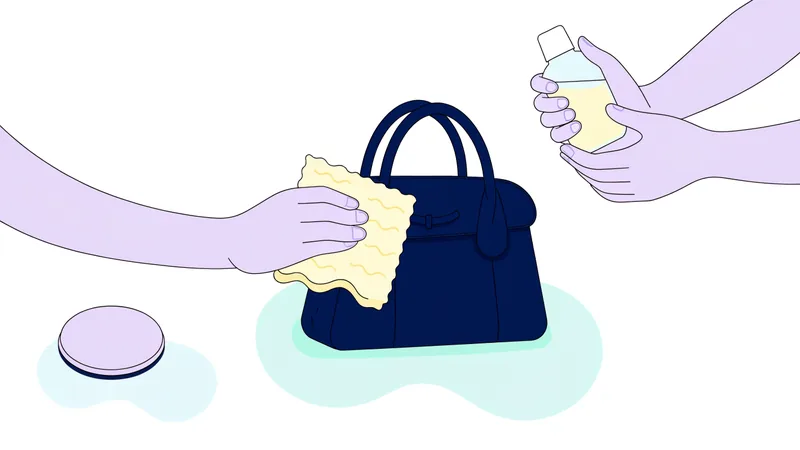
- Clean the bag. Follow its own care instructions.
- Clean permitted accessories. Follow their separate instructions.
- Dry everything fully. Use the maker's drying method.
- Inspect before packing away. Check folds, pockets and padded areas.
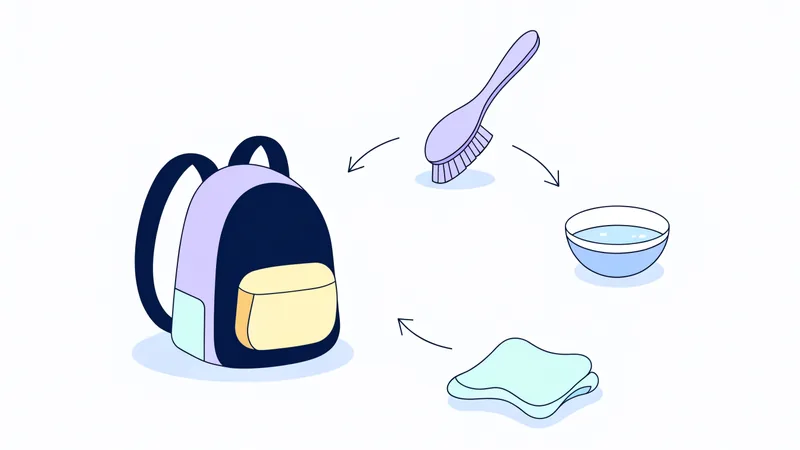
Osprey's backpack-care guide calls for drying in a ventilated place away from direct sunlight. It also distinguishes wheeled-chassis travel packs from ordinary packs when discussing immersion. Do not borrow a backpack washing method for an entire rolling case.
Use the suitcase cleaning guide for luggage and backpack cleaning guide for packs.
If the interior still feels damp, postpone storage. EPA's household guidance emphasizes controlling moisture and promptly drying wet materials. A storage cover is not a substitute for that preparation.
Adjust the arrangement by material and construction

Follow the bag's instructions wherever they specify support, light exposure or storage conditions. Material labels alone do not explain every detail of a mixed-material bag.
Coach's material-care page illustrates this variation: suede and certain natural leathers receive different warnings from ordinary fabric. Its suede guidance specifies a cool, dark storage place.
| Bag or component | Preparation decision | Storage arrangement |
|---|---|---|
| Nesting suitcase collection | Confirm the collection supports nesting | Place smaller cases inside without forcing closure |
| Backpack with padded harness | Finish drying pockets and padding | Support the bag and arrange straps without tight folds |
| Leather-trimmed bag | Read instructions for both body and trim | Keep trim clear of pressing hardware |
| Suede bag | Follow the specialty-material instructions | Use the specified cool, dark location |
| Removable organizer | Clean and dry separately | Return it only after both pieces are dry |
For an older leather collectible, preservation may need specialist advice. The Canadian Conservation Institute emphasizes suitable storage environments and supports for museum leather.
That conservation guidance is not a universal conditioning routine for modern bags. Ask a conservator about fragile historic leather instead of treating it to make it flexible.
Nest carefully and keep straps accessible
Some suitcase ranges are explicitly designed for nesting. Use that feature only after confirming both cases are clean and dry.
Try the arrangement without pressing the lid closed. If the smaller case catches a lining, wheel or handle, choose another arrangement. Keep the trial reversible and avoid using the zipper to pull the cases together.
For backpacks, make accessibility the goal. Lay loose straps within the shelf space, where you can see them. Do not fill the pack with heavy objects simply to use the empty volume.
Before closing the storage area, make this final check:
| Check | Ready to store | Needs attention |
|---|---|---|
| Interior | Empty, clean and dry | Forgotten contents or damp pockets |
| Nesting fit | Cases separate easily | Pressure needed to close |
| Straps | Visible and loosely arranged | Trapped beneath another case |
| Access | Bag can be removed directly | Several bags must be dragged aside |
| Inspection | Location and condition recorded | Existing damage left unexplained |
These are practical organization checks, not load ratings or guarantees against material aging. Keep the maker's instructions with the storage record.
Common mistakes, pests and when to seek help
Do not solve a damp storage room by adding fragrance to the bags. Investigate the moisture source. EPA recommends measuring relative humidity and addressing condensation or leaks.
Do not leave snacks in a daypack or treat a storage closet as a pile of unchecked boxes. EPA's pest-prevention guidance prioritizes removing food, water and shelter, reducing clutter and checking incoming packages.
On your next inspection, remove each bag and examine the surrounding shelf too. Note new odors, visible growth, insect evidence or changes in the lining. Compare the condition with your earlier photographs.
There is no single inspection interval suitable for every home. Choose one based on the room and check sooner after a leak or unusually damp period.
For visible mold, use mold and mildew guidance before returning the bag to shared storage. Seek professional help for a recurring building-moisture problem or fragile material. Consult the maker when coatings, seams or hardware have deteriorated.
FAQ
Can I store one suitcase inside another?
Yes, if the collection is designed for nesting and the cases fit without pressure. Published storage guidance describes nesting for some collections. Clean and dry both pieces first. Keep the smaller case accessible, and choose another arrangement if its hardware catches the larger case's lining.
Is a basement suitable for luggage storage?
Assess moisture and temperature before deciding. Samsonite warns about extremes and advises airing cases stored in basements or attics. Inspect the actual space for leaks and condensation. If conditions are difficult to control, use another location rather than relying on a cover.
How should I store a backpack long term?
The drying and support decisions can change. Osprey's care instructions emphasize ventilation and distinguish ordinary packs from wheeled travel equipment. Follow your pack's instructions, dry padded areas thoroughly, and arrange loose straps where they remain visible. Do not assume a suitcase nesting method suits a framed pack.
What humidity should the storage room have?
For general household mold prevention, EPA recommends below 60% relative humidity, ideally 30–50%. This is room guidance, not a guaranteed preservation specification for every bag. Follow material-specific instructions as well, and investigate leaks or persistent condensation instead of relying only on the meter.
Sources
- shop.samsonite.com/product-care-cleaning.html
- osprey.com/gb/how-to-clean-your-osprey-backpack
- epa.gov/mold/brief-guide-mold-moisture-and-your-home
- epa.gov/safepestcontrol/dos-and-donts-pest-control
- coach.com/support/product-care
- canada.ca/en/conservation-institute/services/conservation-preservation-publications/can…