Doctor bags and Gladstone bags

A doctor bag is a wide-opening carryall historically associated with medical visits and the Gladstone form. Modern versions include framed handbags and larger work bags. Choose by opening size, usable interior and carrying needs, beyond the familiar name.
What identifies a doctor bag?
Look closely at the mouth of the bag. In a framed version, the opening has a supporting structure rather than only a flexible zipper edge. Cambridge Satchel describes its interpretation as a structured frame bag. Design description.
For a historical example, Hampshire Cultural Trust records grained leather over a brass frame, with a sliding lock and rigid leather-covered handle. Collection record.
When examining a current design, request photographs of the mouth fully open and completely closed. Inspect how the sides fold and where the handle attaches.
| Detail to examine | What to identify | Why it matters when choosing |
|---|---|---|
| Top frame | The structure around the mouth | Establish the usable opening |
| Hinge arrangement | Where the frame pivots | Understand the opening movement |
| Closure | How the two sides fasten | Choose a fastening you can operate easily |
| Side panels | How they fold during closure | Plan room for your belongings |
| Carry attachments | Handle and strap positions | Decide how you will carry it |
Treat these as inspection points, rather than features guaranteed by the label. Begin with the broader handbags guide if you are still comparing shapes.
Where the Gladstone connection comes from
A historical account published by the Royal Australian College of General Practitioners explains the connection between portable medical equipment and the Gladstone form. It describes a bag that opened widely from the top, making its contents accessible during visits. David Dammery's 2016 history.
The same account places the Gladstone design in the mid-nineteenth century and explains that its name honors William Gladstone. The history concerns a particular bag form; medical carrying cases have a much longer history. Historical account.
Surviving objects also show use beyond medicine. Museums Victoria holds a Gladstone bag made around 1900 and used by navigator John King Davis. Its recorded journeys include the 1907–1909 British Imperial Antarctic Expedition. Museum provenance.
These records explain why medical and travel references can appear together. They do not make every current product using either name identical.
When choosing a contemporary version, use the historical name to understand its design reference. Then return to the present bag's opening, lining and dimensions. An evocative name should begin the comparison, rather than replace the specification sheet.
Separate compact handbags from larger work versions
Start with what you need to carry. A phone-and-wallet handbag and a document-carrying work bag deserve different comparisons, even when both use a framed silhouette.
The following groups describe uses. They are not standardized size categories.
| Version | Published example | Choosing priority |
|---|---|---|
| Compact fashion handbag | A leather design with detachable strap and 12-inch length; specifications | Fit your actual daily essentials |
| Wider everyday handbag | A model with separately listed exterior and interior dimensions; size guide | Compare usable cavity and overall shape |
| Larger work-oriented version | A range publishing separate body and opening dimensions; maker's FAQ | Fit documents or equipment through the mouth |
For an overnight trip, build a clothing layout before assuming a larger version will work as luggage. Include toiletries and any separate pouches in that exercise.
For professional medical use, establish the required carrying and cleaning specification with your workplace and equipment instructions. A fashion description is insufficient for that decision.
If you want a larger container that stays at your destination, compare trunks and travel chests. Keep everyday access, work organization and trip storage as separate tasks while deciding which matters most.
Read body, opening and handle measurements separately
Write dimensions in a consistent order before comparing products. Use width x height x depth for the body, then record the opening and handle separately.
One handbag's published interior is 13.98 x 6.69 x 3.94 inches in that order. Its height including the handle is 10.04 inches. Maker's measurements.
That distinction is useful when planning storage, but it still leaves the opening as a separate question. VanVeer publishes both body and mouth measurements for its larger designs. Dimensional definitions.
| Published example | Body width x height x depth | Additional fit information |
|---|---|---|
| Compact leather handbag | 12 x 7.5 x 3.5 inches | Exterior dimensions only; source |
| Framed everyday handbag | 14.37 x 7.09 x 5.51 inches | Height excludes handle; source |
| Larger work-oriented bag | About 16.93 x 11.81 x 7.48 inches | Opening about 14.17 x 7.09 inches; source, converted from centimeters |
These are individual examples, not category limits. For a hypothetical rigid item wider than a bag's opening, reject a straight-through fit even if the body looks spacious.
Use how to measure a bag to distinguish exterior size from capacity. Avoid calculating advertised liters from exterior dimensions alone.
Plan access, organization and carrying style
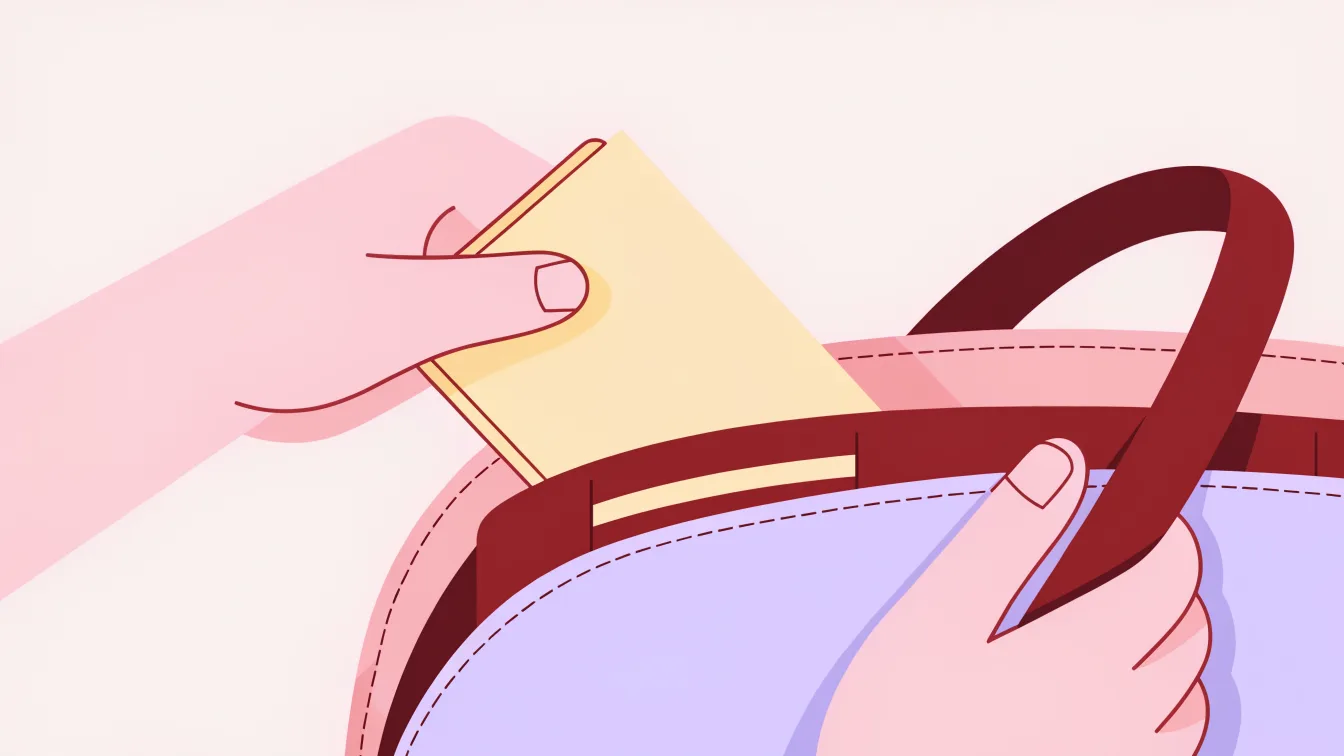
Build your packing plan around access through the frame. First place the largest rigid object, then arrange smaller belongings without occupying the space needed to close the mouth.
For a work bag, use the exact computer dimensions rather than its screen-size label alone. VanVeer's FAQ identifies its Office model as the version carrying a 15-inch laptop. That statement applies to its range. Maker's fit guidance.
For everyday use, divide belongings by how often you need them. Keep a simple layout before adding organizers that might interfere with the opening.
| Packing group | Suggested position | Fit exercise |
|---|---|---|
| Largest rigid item | Establish its position first | Insert and remove it through the mouth |
| Wallet and phone | Assign an accessible space | Retrieve them without emptying the bag |
| Small loose items | Use a suitable pocket or pouch | Keep them clear of the closure |
| Occasional extras | Add after essentials | Close the bag without forcing the frame |
For carrying, distinguish the short handle from any longer strap. A compact example lists both leather handles and a detachable leather strap. Published features.
Rehearse opening and closing the bag in the way you expect to use it. Decide whether you want to set it down before retrieving belongings.
Compare materials without assuming a performance ranking
Read the exterior, lining and hardware descriptions separately. A leather label does not describe every component or settle which construction suits you.
For example, Cambridge Satchel's launch description specifies soft-grain calf leather and a cotton-twill lining for its interpretation. Maker's material description.
The historical Hampshire example instead records a grained leather exterior, red morocco-leather lining and brass frame. Museum description.
Use such details to understand construction, without treating an antique example as a current manufacturing standard.
| Specification | Look for | Avoid assuming |
|---|---|---|
| Exterior | Exact material and finish | Every leather surface takes the same treatment |
| Lining | Material and access to seams | A lining can be removed or washed |
| Frame | Material and fastening arrangement | A metal frame proves a load rating |
| Strap attachments | Construction and compatibility | Any replacement strap will fit |
| Care label | Instructions for the exact model | One cleaning method suits the entire category |
For style, choose the finish around your own preferences and wardrobe. There is no requirement to pair a traditional shape with formal clothing. Treat outfit suggestions as options, rather than rules attached to the bag's history.
Care for the surface and the mechanism
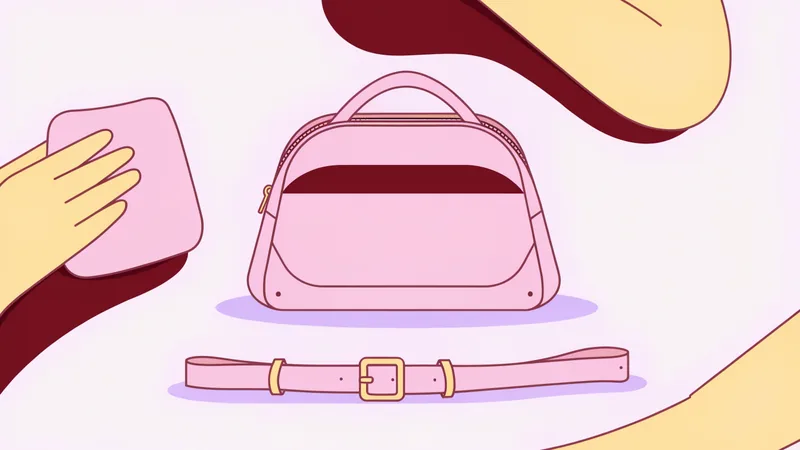
Follow the exact care label before applying cleaner. Cord Studio's compact example specifies dry cleaning only, so avoid applying a generic washing routine. Product instructions.
Cambridge Satchel's guidance advises wiping away excess water and allowing its leather to dry naturally. It also recommends testing care products on an unobtrusive area first. Maker's care guidance.
That guidance warns that wet sanitizer can discolor or alter the leather's finish. Let hands dry before handling a product covered by those instructions. Surface-care warning.
Inspect the mechanism separately from the leather. Look for obstructions around the closing edges, and contact the maker if alignment or operation changes. Follow its repair instructions before attempting adjustment.
For storage, empty the bag and follow any supplied support instructions. Avoid choosing an insert so large that you must close the frame against it.
A doctor bag earns its place through usable access and suitable proportions. Preserve those features by choosing a manageable packing layout and a care routine matched to its construction.
For more detailed surface instructions, see how to clean a leather bag.

FAQ
Is a Gladstone bag the same as a doctor's bag?
The terms overlap historically, but inspect the actual construction when choosing a current product. A medical history published by RACGP describes doctors using the Gladstone form for its wide top opening. Museum records also document Gladstone luggage used for travel. Historical account; travel example.
Can a framed handbag carry a laptop?
Establish the usable opening, interior measurements and any designated sleeve before deciding. A wide exterior alone is insufficient. One maker identifies a particular Office model as carrying a 15-inch laptop within its range. Match your actual computer and protective case to the exact model's instructions. Maker's guidance.
Does the frame make the bag waterproof?
Do not infer water protection from the frame or closure. Look for an explicit claim covering the exact construction. For example, Cambridge Satchel advises avoiding heavy downpours and drying wet leather naturally. Apply the maker's care instructions to that product rather than treating frame construction as a weather rating. Care guidance.
How do I choose the right size?
Start with your largest rigid item and the opening it needs. Then map the rest of your belongings into the interior. Record body dimensions, usable opening and handle height separately. If possible, rehearse packing and closing the bag with your normal contents before deciding that a size suits your routine.
Related guides
- Bowling bags: another top-handle shape, with different opening and carrying arrangements.
Sources
- racgp.org.au/afp/2016/september/a-historical-account-of-the-doctors-bag
- collections.hampshireculture.org.uk/object/bag-gladstone-bag-grained-brown-leather-line…
- collections.museumsvictoria.com.au/items/260940
- us.cambridgesatchel.com/blogs/journal/the-doctor-will-see-you-now
- us.cambridgesatchel.com/pages/size-guide
- vanveer.com/pages/faq
- cordstudio.in/products/new-doctor-bag-b25-ndoc-olv
- us.cambridgesatchel.com/pages/how-to-care-for-your-bag